
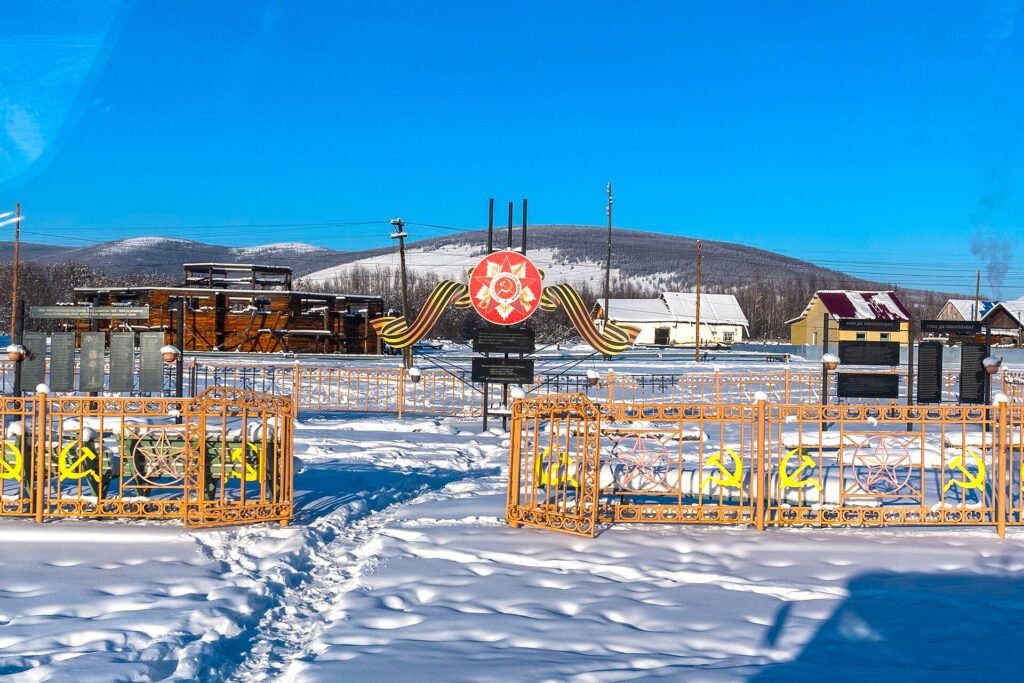
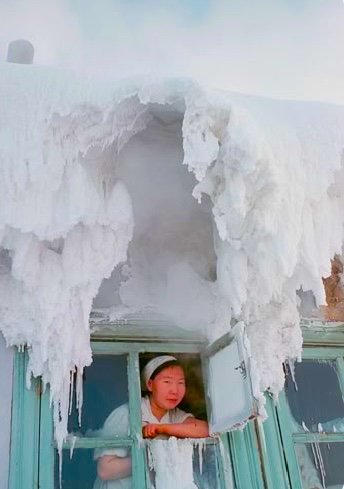
Located just a few hundred miles from the Arctic Circle, one remote settlement subjects its residents to average winter temperatures of -58°F (-50°C). Stepping outside without proper clothing can cause a person to freeze to death in approximately one minute.
Despite these extreme conditions, 500 people actively choose to live, work, and attend school in this frozen environment. The daily reality of Oymyakon, Russia, involves eating frozen horse blood, leaving cars running overnight, and navigating a town built entirely on underground stilts.
Subzero Daily Life in The Pole of Cold
Oymyakon is officially known as “The Pole of Cold.” The population of 500 consists mostly of Indigenous Yakuts, along with ethnic Russians and Ukrainians. The streets are largely empty as residents rush between indoor locations to avoid the dangerous temperatures. The town features a single store, a bank, a post office, a gas station, and a small airport.
Schools remain open in the freezing weather and only shut their doors when the temperature drops below -60°F (-51.1°C). Because the permafrost runs 13 feet (3.96 meters) deep, every structure is built on underground stilts to prevent the ground from shifting.
Extreme Diets and Frozen Vehicles
Farming crops is impossible in this climate. Locals rely on livestock and a diet heavily featuring reindeer meat, fish, and chunks of frozen horse blood. Residents drink vodka, which they refer to as “Russki Chai” or Russian Tea, believing it helps keep them warm. A nearby thermal spring stays unfrozen, providing drinking water for farm animals.
Vehicle maintenance requires extreme measures. Drivers often leave their cars running overnight to prevent the engines from seizing, yet the driveshafts can still freeze solid in the cold.
Soviet History and the Diamond Economy
During the Soviet era, the government offered high wages to convince laborers to move to Oymyakon and the nearby city of Yakutsk. The highway connecting Oymyakon to Yakutsk was built by gulag prison laborers and is called the “Road of Bones” because thousands of workers died during its construction.
Today, lumberjacks and miners work outdoors in the freezing climate. The region is rich in oil, gas, and diamonds. The Russian corporation Alrosa is headquartered in the area and supplies 20 percent of the world’s rough diamonds, making it the largest producer globally by carats.
Summer Thaws and Arctic Tourism
The weather fluctuates drastically throughout the year. Winter provides only three hours of daily sunlight, while summer offers 21 hours of daylight and temperatures that can reach 90°F (32.2°C). Every year, approximately 1,000 tourists travel to Oymyakon.
Visitors ride Yakut horses, consume raw foal liver, eat frozen fish, drink vodka from ice cups, and experience hot Russian baths before stepping directly into the freezing outdoor air.