
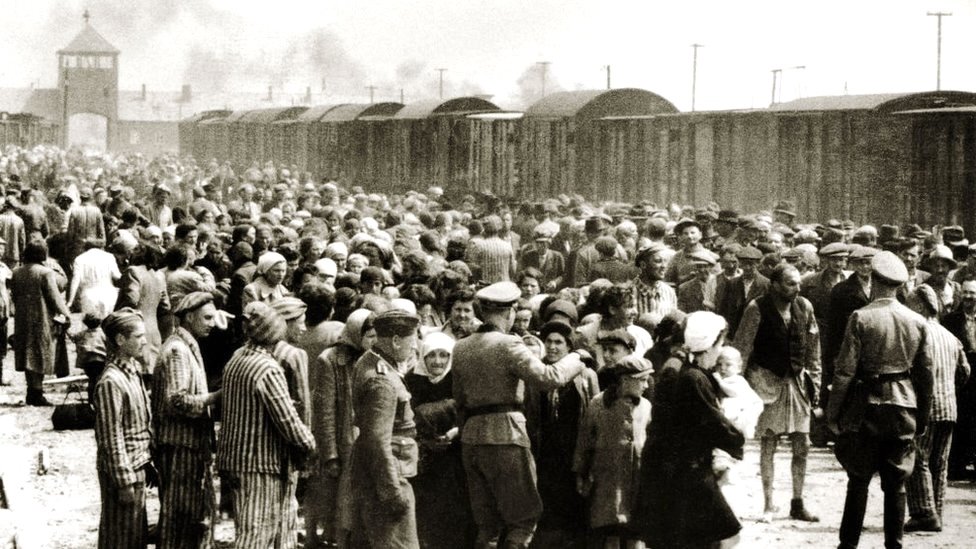
In late July 1941, SS guards at Auschwitz lined up prisoners after a man disappeared from the camp and selected ten to starve to death in an underground bunker. When one chosen man cried out for his wife and children, a 47-year-old Polish priest stepped out of line and asked to take his place. That prisoner was Maximilian Kolbe, a Franciscan friar whose path ran from rural Poland and missionary work in Nagasaki to prisoner number 16670 inside Block 11.
From a Boyhood Vision to International Publishing
Born Raymund Kolbe in Zduńska Wola, Poland, on January 8, 1894, he grew up the son of a weaver and a midwife. As a boy, he described a vision in which the Virgin Mary offered him two crowns, white for purity and red for martyrdom, and told her he accepted both.
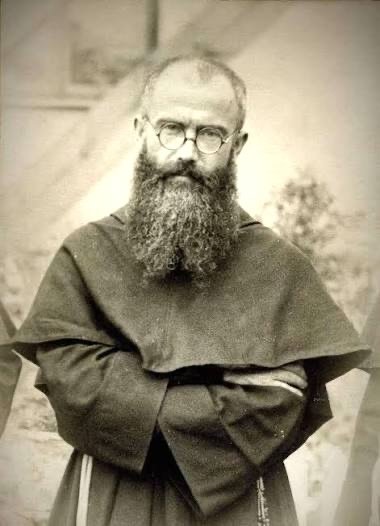
He entered the Conventual Franciscans, took the name Maximilian, earned doctorates in philosophy and theology in Rome, and was ordained a priest in 1918. Back in Poland, he launched the monthly Knight of the Immaculata and founded the Niepokalanów monastery near Warsaw in 1927. In 1931, he built another monastery outside Nagasaki, Japan, before returning to Poland in 1936 to lead Niepokalanów and operate an amateur radio station, call sign SP3RN.
War, Sheltering Refugees, and Arrest by the Gestapo
When Germany invaded Poland in September 1939, Kolbe stayed at Niepokalanów and set up a temporary hospital. Arrested on September 19, he refused to register on the Deutsche Volksliste, which granted German privileges to people of ethnic German descent.
Released in December 1939, he returned to the monastery, where the friars sheltered refugees from Greater Poland, including Jewish refugees, while continuing to issue publications considered anti-Nazi. On February 17, 1941, the Gestapo shut down Niepokalanów and jailed Kolbe in Warsaw’s Pawiak prison. On May 28, 1941, he was transferred to Auschwitz as prisoner 16670.
Two Weeks Inside the Block 11 Starvation Bunker
At the end of July 1941, deputy camp commander Karl Fritzsch picked ten prisoners to starve in Block 11. Selected to die, Franciszek Gajowniczek cried out, “My wife! My children!” Kolbe stepped forward and volunteered to replace him, and Fritzsch agreed. Inside the underground cell, the ten men received no food or water.
An assistant janitor later testified that Kolbe led them in prayers and hymns and stood or knelt calmly when guards checked the bunker. After two weeks, Kolbe and three others were still alive. To clear the cell, guards gave them lethal injections of carbolic acid. Kolbe died on August 14, 1941, and was cremated the next day.
The Man Who Survived to Witness Canonization
Franciszek Gajowniczek survived Auschwitz and the war. He attended both Kolbe’s beatification by Pope Paul VI in 1971 and his canonization by Pope John Paul II in Saint Peter’s Square on October 10, 1982.