
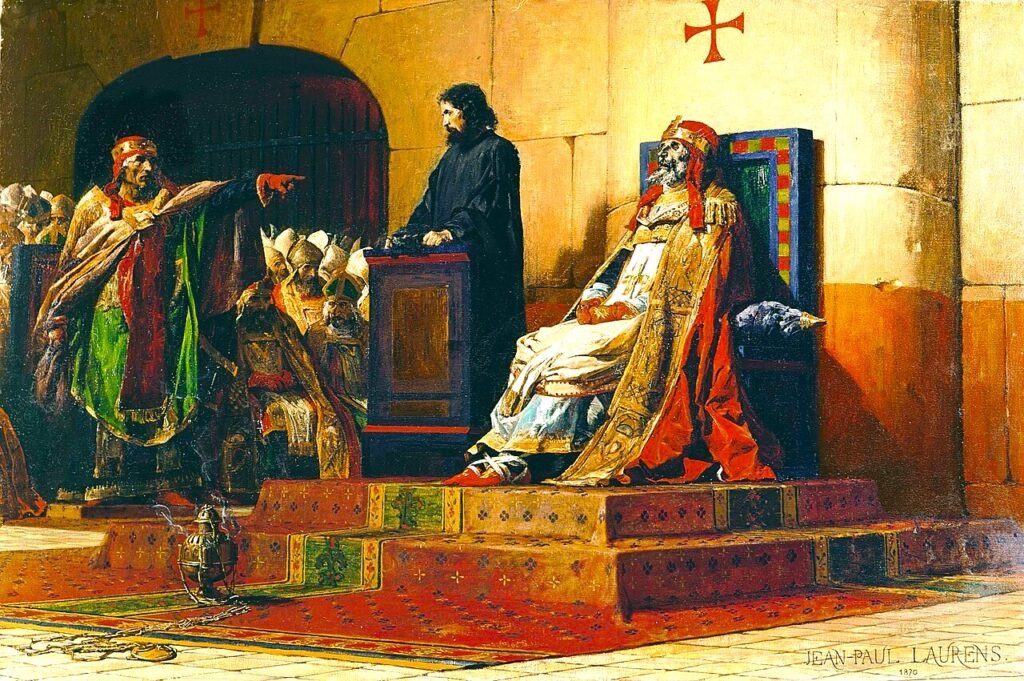
In the year 897, a decomposing corpse was dressed in lavish papal robes, propped upon a wooden throne, and subjected to a formal legal trial. The defendant was Pope Formosus, who had been dead for seven months.
His prosecutor was the current ruling pontiff, Pope Stephen VI. This grim public spectacle, widely known as the Cadaver Synod, shocked the citizens of Rome and exposed the intense political corruption controlling the ninth-century church.
Imperial Politics and a Suspicious Death
During the eighth and ninth centuries, the Holy Roman Empire experienced continuous wars and violent feuds among wealthy nobles. The papacy actively participated in this chaos by appointing bishops as nobles within the empire. Pope Formosus alienated powerful factions during his reign due to theological disputes and conflicts over resources with Count Guy of Spoleto.
While raising a military force against Spoleto, Formosus suffered sudden paralysis and died. This convenient death solved several political problems for his enemies. His immediate successor survived only two weeks before dying of alleged gout, quickly paving the way for Stephen VI to take power.
The Quiet Rise of Pope Stephen VI
The historical record reveals very little about Stephen’s early life. Historians do not know his exact birth year or his birth name. The son of a Roman priest, he entered the church and advanced quietly through the bureaucracy. Formosus actually ordained him as a bishop, likely under direct pressure from Count Guy of Spoleto.
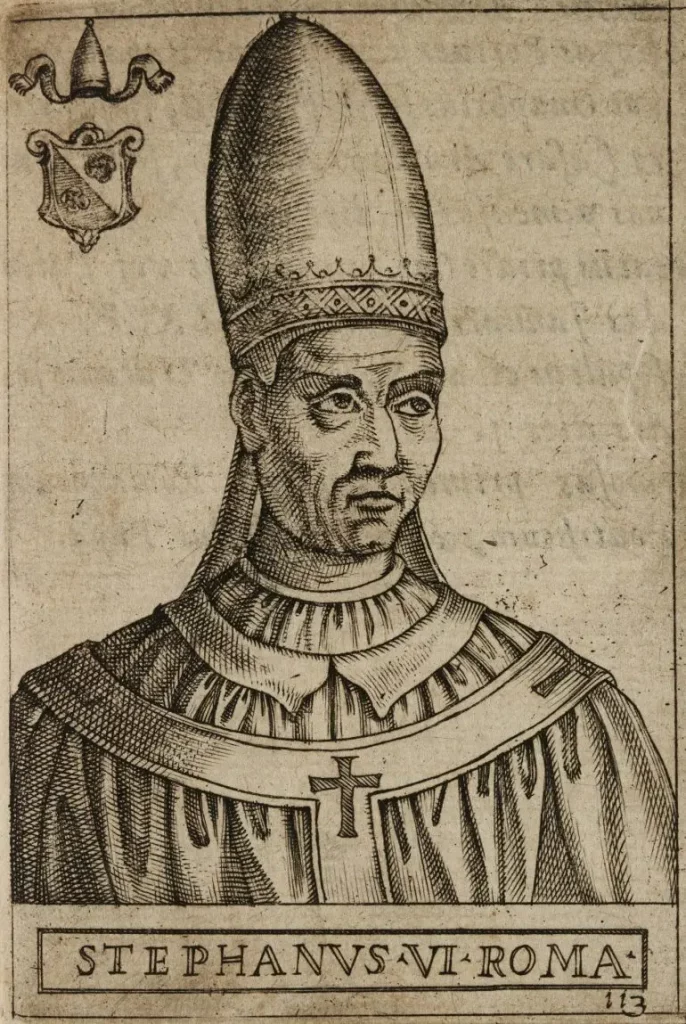
Stephen left no recognized theological writings and maintained a completely low profile. He advanced steadily through the church hierarchy by remaining a quiet cipher until he suddenly seized the papacy.
The Bizarre Court Proceedings
Once in power, Stephen VI aggressively overturned every decision made by Formosus. He revoked all previous appointments and launched a massive political purge. To satisfy his political backers, Stephen ordered the exhumation of his predecessor.
The seven-month-old corpse was dragged into the basilica and formally charged with heresy and arcane offenses against the church. A living deacon crouched behind the dead body to answer the aggressive charges. When Stephen shouted leading questions at the corpse, the terrified deacon confessed on behalf of Formosus, stating he had acted out of pure evil.
Mutilation and the Deadly Backlash
The court immediately convicted the dead pontiff. Stephen ordered the guards to strip the corpse of its vestments and cut off the three fingers Formosus had used to give blessings. The body was initially thrown into a common grave. Shortly after, the corpse was dug up a second time and tossed into the Tiber River.
This extreme spectacle horrified the Roman public. Within a few months, a violent rebellion deposed Stephen VI. He was thrown into a local prison and quickly strangled. His successor then completely reversed all the rulings of the Cadaver Synod.