
During the height of the Cold War, Western intelligence analysts discovered something inexplicable on satellite imagery. Skimming just meters above the water was a gigantic machine—heavier than any aircraft in existence, yet moving faster than any naval ship. It looked like a bizarre hybrid between a boat and an airplane.
Unbeknownst to the United States, the Soviet Union had developed a massive, 544-tonne experimental ground effect vehicle. It operated below the radar, evaded conventional categorization, and became a distinctive subject of international espionage. For fifteen years, this colossal craft dominated the waters before suddenly disappearing beneath the waves.
Engineering the Ultimate Ekranoplan
Developed between 1964 and 1966 by the Central Hydrofoil Design Bureau, the KM (short for Korabl Maket, or Ship-Model) was the brainchild of chief designer Rostislav Alexeyev. The Soviets wanted a transport vehicle that could use ground effect to hover and glide slightly above the surface of the water, increasing speed and fuel efficiency.
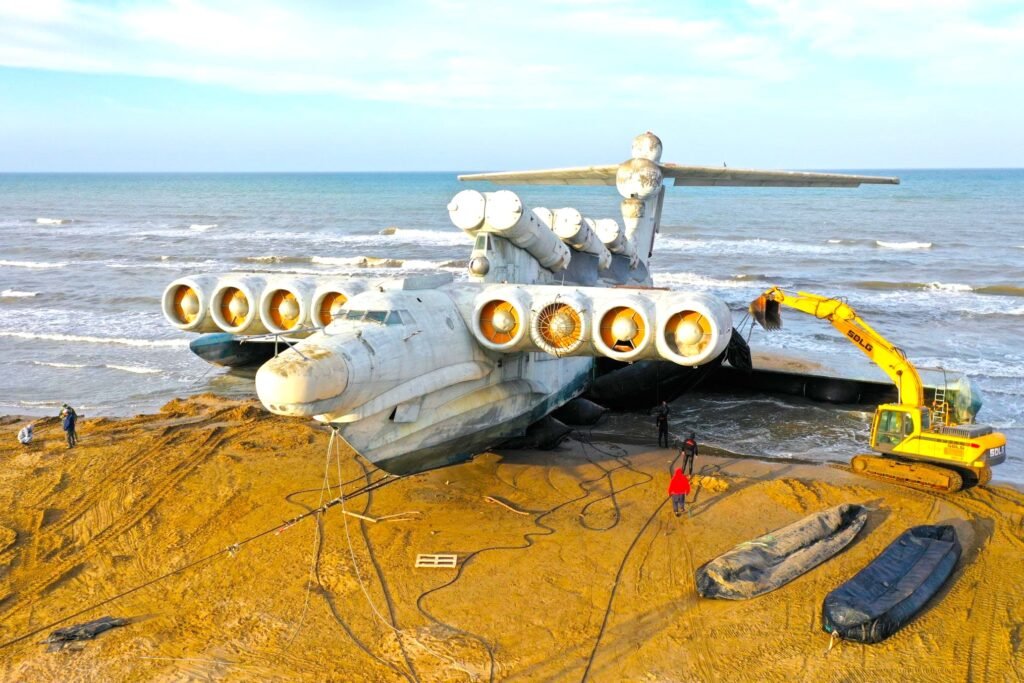
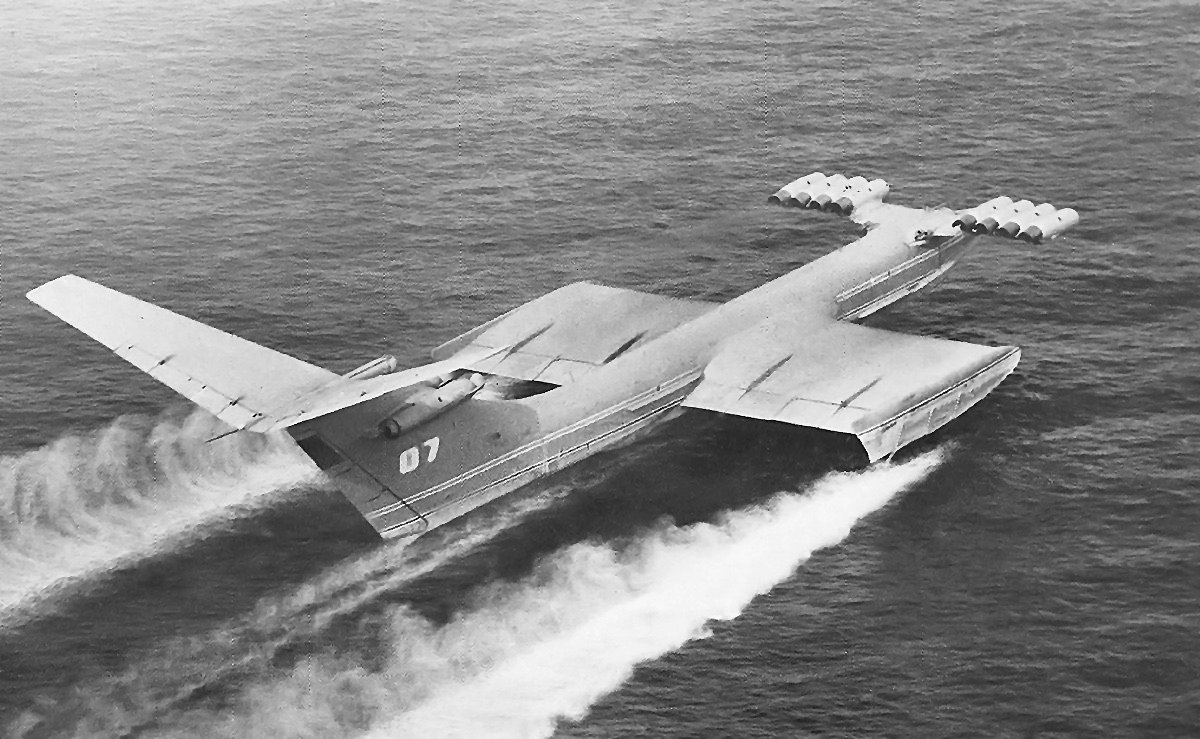
Manufactured in Gorky, the KM was an exercise in extreme scale. It boasted a wingspan of 37.6 meters and a length of 92 meters. To get this massive structure off the water, engineers equipped it with ten Dobrynin VD-7 turbojet engines. Eight were mounted on the canard to push air under the wings for lift during takeoff, while two tail-mounted engines propelled it forward at cruising speeds of 430 kilometers per hour.
A Top-Secret Testing Program
In June 1966, the completed prototype was secretly transported down the Volga River. Covered entirely in camouflage, the machine was moved only under the cover of night to avoid detection. Once it reached the testing grounds near Kaspiysk, the Soviet Navy took operational control, though test pilots from the Soviet Air Forces actually flew the machine.
Despite functioning like an airplane, officials classified it as a marine vessel. In accordance with naval tradition, a bottle of champagne was broken across its nose before its maiden flight in October 1966. For more than a decade, the Caspian Sea Monster held the title of the largest and heaviest aircraft in the world.
The 1980 Crash and Sinking
The KM flew extensive trials over the water, successfully avoiding radar detection by operating at an altitude of just five to ten meters. However, the experimental design presented severe handling challenges. On a test run in 1980, the pilot made a critical error at the controls, causing the massive craft to crash heavily into the sea.
All crew members evacuated without injury, but the damage to the 544-tonne structure was extensive. Soviet authorities evaluated the situation and determined the machine was simply too heavy and cumbersome to recover. Left adrift, the Caspian Sea Monster floated on the surface for a week before finally sinking to the bottom, where the wreckage remains today.