
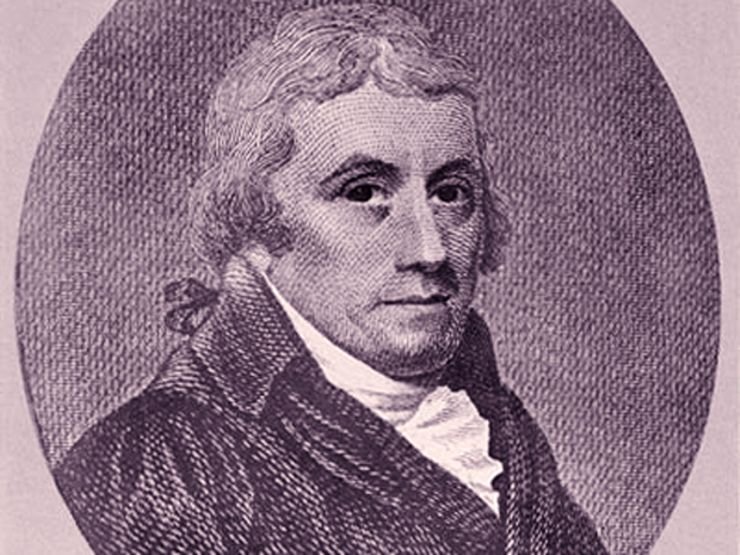
In the early nineteenth century, an American medical trainee took scientific research to extreme lengths to prove a medical theory. Convinced that yellow fever was not a contagious disease, he turned his own body into a laboratory.
His methods went far beyond standard observation and involved direct, stomach-churning exposure to the bodily fluids of infected dying patients. He sliced open his own arms, poured infected matter into his eyes, and eventually consumed the bodily fluids of the sick. This historical event reveals the shocking lengths one researcher went to in order to solve a deadly medical mystery.
The Devastating Philadelphia Epidemic
In 1793, the city of Philadelphia in Pennsylvania experienced the largest yellow fever outbreak in American history. The illness swept through the streets and ultimately killed up to 5,000 residents, which accounted for approximately 10 percent of the local population.
A few years later, in 1801, a man named Stubbins Ffirth enrolled at the University of Pennsylvania to study medicine. By his third year of medical studies, Ffirth decided to investigate the exact cause of the illness that had devastated the region. He observed that case numbers dropped significantly during the cold winter months. This observation led him to hypothesize that the summer heat and seasonal stress caused the illness, rather than human-to-human transmission.
Slitting Arms and Pouring Fluids
To prove that yellow fever was completely non-contagious, Ffirth designed a series of self-experiments using the bodily fluids of severely infected patients. He began his trials by taking a scalpel and making open incisions on his own arms. He then actively smeared infected vomit directly into his bleeding cuts.
When this exposure failed to make him sick, he escalated his methods. Ffirth took the infected vomit and poured it directly onto his own eyeballs. Despite these extreme exposures, his health remained completely stable and unaffected by the disease.
Drinking Extreme Medical Samples
Determined to trigger a reaction, Ffirth took his trials even further. He placed the infected vomit into a pan, fried it over a fire, and deeply inhaled the resulting fumes.
When he still did not fall ill, he resorted to pouring the undiluted vomit into a glass and drinking it. He expanded his trials beyond vomit, collecting blood, saliva, and urine from infected patients. He smeared these additional fluids all over his body. Ffirth remained perfectly healthy throughout the entire ordeal.
The Flawed Medical Conclusion
Ffirth published his extensive findings in his 1804 thesis titled A Treatise on Malignant Fever. He viewed his continued good health as absolute confirmation that yellow fever could not be transmitted between humans. However, his conclusion was incorrect.
Medical historians later discovered that Ffirth used fluid samples from late-stage patients who were no longer carrying the live virus. It took another sixty years before Cuban scientist Carlos Finlay made the breakthrough discovery that mosquitoes carried and transmitted the disease.