

Wolfgang Amadeus Mozart is universally recognized for his exquisite classical compositions. Yet, buried within his private correspondence and unpublished musical rounds lies a very different side of the famed composer. A collection of 39 preserved letters reveals a prolific use of scatological humor and crude wordplay that has puzzled scholars for decades. The content was so shocking that a British Prime Minister flatly refused to believe the documents were authentic. What exactly did Mozart write to his family and friends, and why did he write it?
Family Correspondence and the Bäsle Letters
Almost all of the composer’s coarse letters were directed to his immediate family. His father Leopold, mother Anna Maria, and sister Nannerl all exchanged letters containing similar jokes. In one 1777 letter, Anna Maria sent her husband a rhyming poem wishing him a good night before vividly describing a bodily function. Some of the most extreme examples are the “Bäsle letters,” written to Mozart’s cousin, Maria Anna Thekla. Following a visit to Augsburg, he sent her numerous letters combining complex wordplay, sexual references, and overt scatology.
Vulgarity in Classical Compositions
The composer’s crude humor extended into his recreational music. He wrote several canons—musical rounds where voices enter sequentially—featuring highly explicit lyrics. These pieces were likely shared among a closed group of friends. One of his canons, K. 231, features the lyrics “Leck mich im Arsch” (a standard German vulgarism). After his death, publishers printed these canons with heavily sanitized lyrics; a line about a bodily function was completely replaced with a polite phrase about drinking wine.
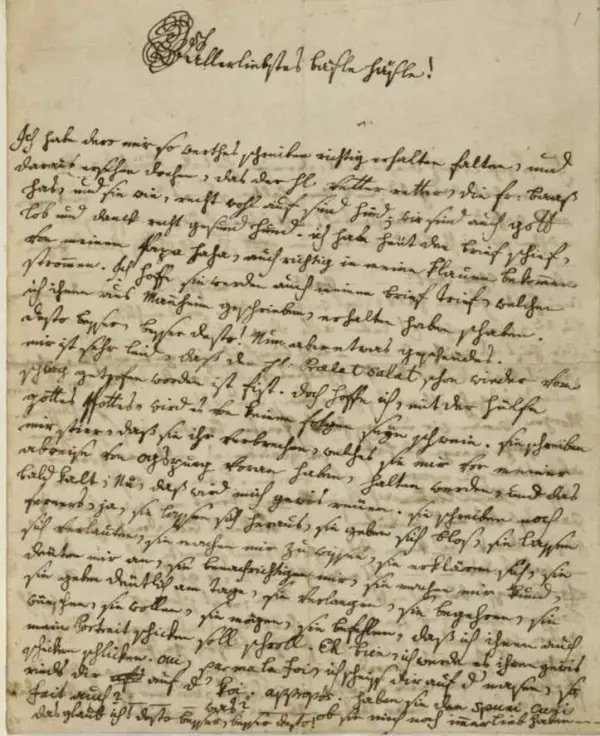
A Prime Minister’s Disbelief
The stark contrast between Mozart’s elegant public image and his private writings has frequently provoked strong reactions. When Prime Minister Margaret Thatcher attended a performance of the play Amadeus, she was highly displeased by the depiction of the composer using foul language. Theater director Peter Hall explained that the letters proved this behavior, but Thatcher called it inconceivable. Hall sent a copy of the actual letters to Number Ten Downing Street, but the Prime Minister maintained her position, insisting Hall was entirely wrong.
Folklore Versus Medical Diagnoses
In the 1990s, endocrinologist Benjamin Simkin cataloged the letters and argued that the composer had Tourette syndrome. This sparked international media attention, but psychiatrists and the Tourette Syndrome Association heavily criticized the claim, calling the diagnosis implausible due to a lack of evidence of motor tics. Cultural anthropologists point instead to 18th-century German culture. During that era, popular theater prominently featured coarse characters, and folklorists note that German folk speech of the time commonly utilized this exact type of humor.