
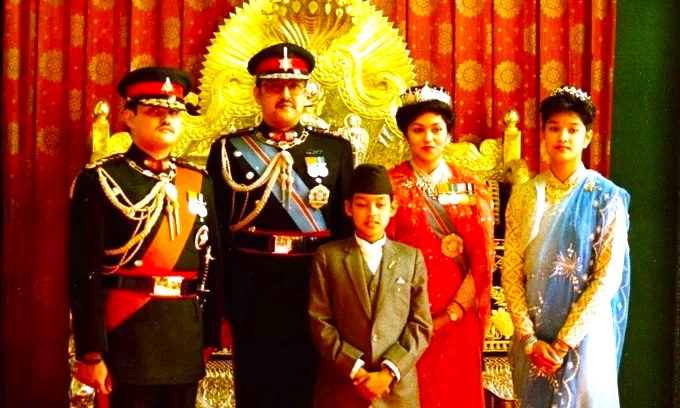
On the night of June 1, 2001, a private family gathering inside Kathmandu’s Narayanhiti Royal Palace ended in an unprecedented bloodbath. Twenty-nine-year-old Crown Prince Dipendra opened fire on his own family, killing nine relatives before turning the weapon on himself. Because he survived in a coma for three days, the crown automatically passed to him, making him Nepal’s brief “Ghost King.” This is the factual account of the massacre and the motives surrounding it.
The Crown Prince’s Hidden Nature
Born on June 27, 1971, Dipendra Bir Bikram Shah Dev was next in line for the Nepalese throne. He experienced a highly privileged upbringing, attending Eton College, earning a PhD at Tribhuvan University, and completing military training. He enjoyed firearms and sports cars, once closing local roads to speed around Kathmandu during Princess Diana’s 1993 visit.
Behind closed doors, palace staff noted his sadistic behavior, reporting that he enjoyed burning cats and mice. He also harbored intense anger toward his father, King Birendra, who transitioned Nepal to a constitutional monarchy. Dipendra reportedly broke a door upon hearing of this shift.
The Narayanhiti Palace Bloodbath
During the party, witnesses noted that the crown prince was heavily intoxicated. An inquest determined he was under the influence of whiskey and a cigarette containing hashish and an unidentified black substance. Dipendra left early, returning in army fatigues and heavily armed. He walked straight into a drawing room and shot King Birendra, who asked, “What have you done?”
Dipendra never answered. He methodically moved through the room. He killed his brother, Prince Nirajan, and their mother, Queen Aishwarya. He then shot his sister as she bent over her injured husband. In minutes, nine royals were dead. Dipendra walked to a footbridge and shot himself in the head.
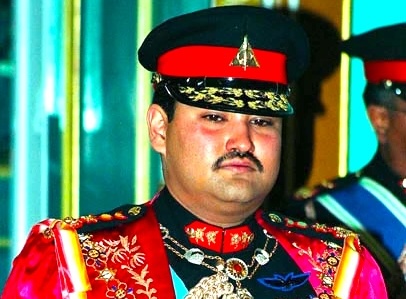
A Forbidden Romance
Investigators pointed to two primary motives for the murders. Aside from his fury over the loss of absolute power, Dipendra was involved with Devyani Rana, a woman he met in England. Both families objected to a marriage. Dipendra’s family disapproved of Rana’s mother’s social caste and her father’s political ties. Rana’s family, who possessed greater wealth, also doubted the match. On the night of the murders, Dipendra called Rana multiple times with heavily slurred speech. In their final conversation, he simply stated he was going to bed before hanging up.
The Left-Temple Controversy
Dipendra died on June 4, and his uncle Gyanendra assumed the throne. Observers noted suspicious details about the official narrative. Dipendra was right-handed, yet the fatal gunshot wound was located on his left temple. Furthermore, Gyanendra was absent from the palace party that night, and Gyanendra’s son Paras survived unharmed. Despite these details, no definitive proof has emerged to implicate anyone other than Dipendra. Gyanendra’s reign was short, as the Nepalese monarchy was officially abolished in 2008.