
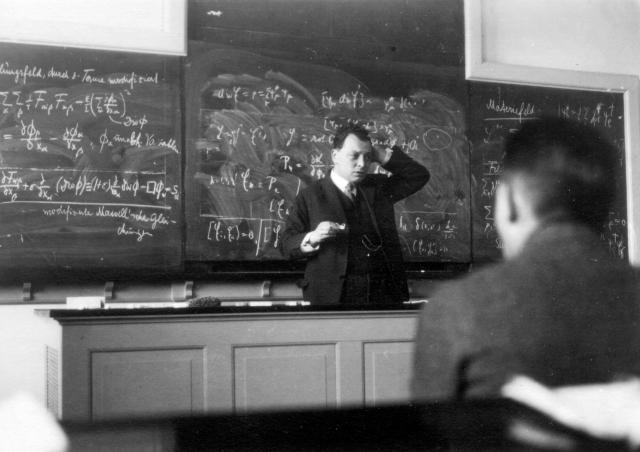
A brilliant scientist walks into a building, and expensive machinery instantly malfunctions, catches fire, or shatters. This sounds like a science fiction movie plot, but for Austrian physicist Wolfgang Pauli, it was a documented reality.
Known in the scientific community as the Pauli effect, this phenomenon describes the bizarre tendency of technical equipment to suffer critical failures whenever Pauli was nearby. The occurrences were so frequent that his peers humorously formulated a second Pauli exclusion principle, stating that a functioning device and Wolfgang Pauli cannot occupy the same room.
Banned From The Physics Laboratory
The divide between theoretical and experimental physicists was well known in the twentieth century. Theorists occasionally broke things, but Pauli’s presence alone seemed to trigger unexplainable disasters. While working at the University of Hamburg, Pauli developed a reputation for destroying physical experiments just by standing near them.
Experimental physicist Otto Stern noticed this consistent pattern. Fearing for his valuable laboratory equipment, Stern officially banned his friend Pauli from entering the facility to prevent further damage during important experiments.
The Göttingen Train Station Incident
The most unusual occurrence happened at the University of Göttingen. James Franck, the director of the institute, witnessed an expensive measuring device suddenly stop working for no apparent reason. Since Pauli was nowhere near the building, Franck sent a letter to Zurich, joking that Pauli was innocent this time.
The response revealed a different reality. Pauli had been traveling on a railway journey to Zurich and was switching trains at the Göttingen rail station at the exact moment the equipment broke down.
A Failed Prank and Exploding Machinery
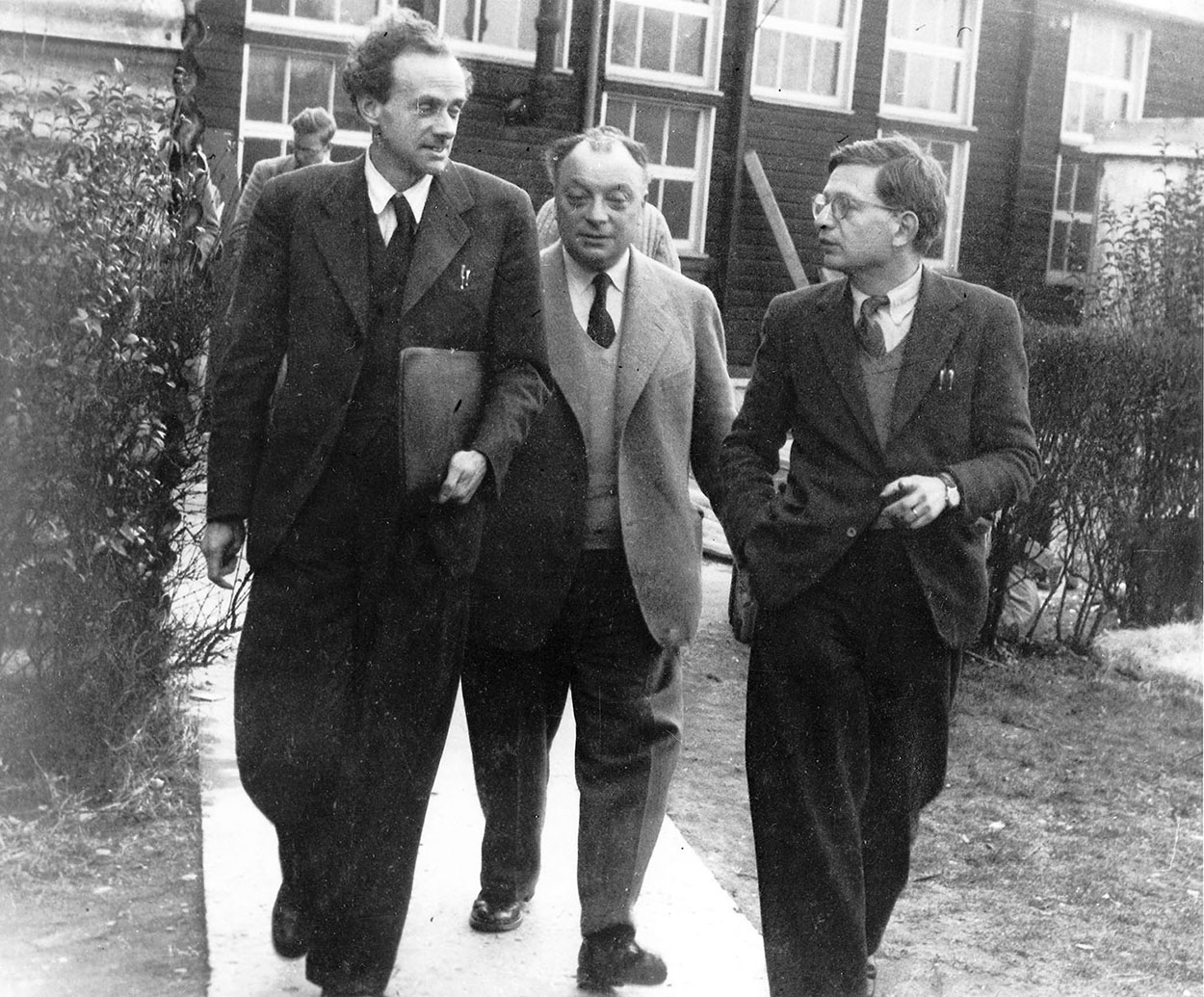
Colleagues eventually tried to parody the phenomenon. Physicist R. Peierls rigged a chandelier suspended by a rope to crash when Pauli walked into a reception room. When Pauli entered, the release mechanism jammed. The equipment failed to work, resulting in an authentic manifestation of the phenomenon.
Other incidents followed him globally. In 1934, his car inexplicably broke down during a honeymoon tour without an obvious external cause. In February 1950, a cyclotron caught fire while he was visiting Princeton University.
Synchronicity and The Dropped Vase
Pauli took the occurrences very seriously. He claimed to feel an unpleasant tension just before machinery broke. He began corresponding with Carl Jung, Marie-Louise von Franz, and parapsychology lecturer Hans Bender to study synchronicity. In 1948, Pauli attended the foundation festivities of the C.G. Jung Institute in Zurich.
The moment he stepped inside, a china flower vase fell to the floor and shattered without an obvious cause. Prompted by this specific event, Pauli authored an article titled “Background-Physics” to document the relationship between depth psychology and the physical world.