
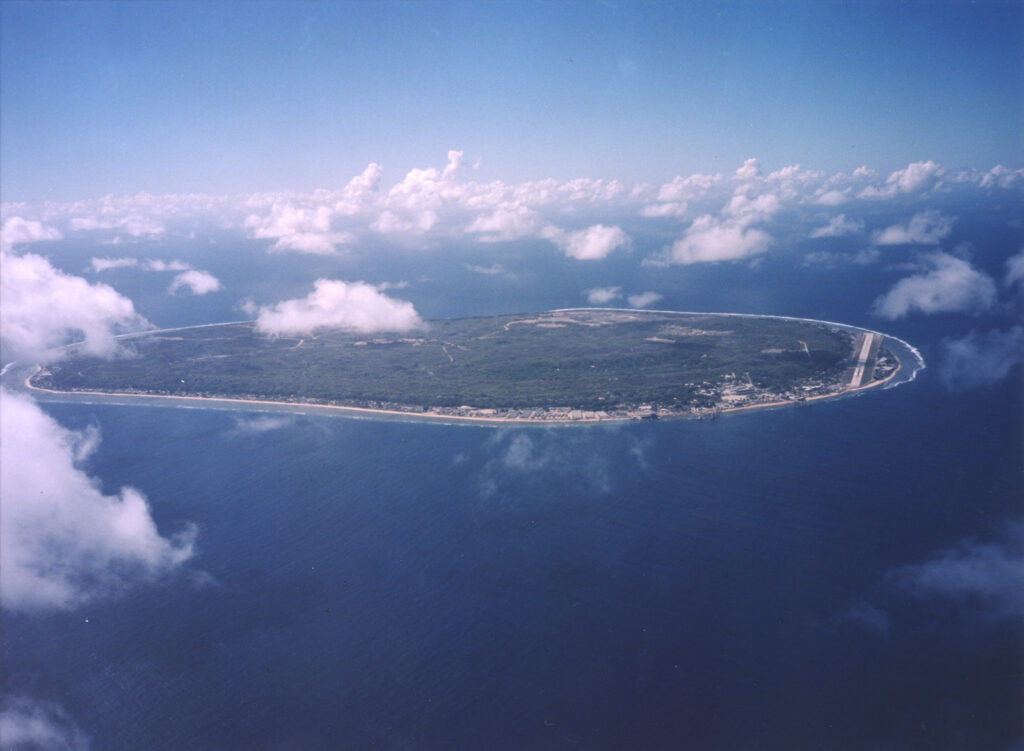
In 1798, a British captain sailing the South Pacific spotted an eight-square-mile speck of land and named it “Pleasant Island.” Today, this isolated coral outcropping is the independent Republic of Nauru, the world’s smallest island nation.
The country went from a remote settlement to one of the wealthiest nations on Earth, only to face environmental collapse, severe economic deficits, and widespread public health crises. This recounts how an ancient society experienced global wars, obtained a temporary financial fortune, and fundamentally altered its physical geography.
A History of Isolation and Conflict
Micronesian and Polynesian settlers inhabited Nauru around 1000 B.C.E., establishing a society of 12 clans. By the 1830s, European whaling ships began arriving, introducing alcohol and firearms. This sparked a civil war in 1878 that reduced the island’s population from 1,400 to 900.
Germany annexed Nauru in 1888, confiscating all weapons. Global conflicts soon arrived on its shores: Australian forces captured the island during World War I, and Japan occupied it during World War II, subjecting 1,200 Nauruans to forced labor while American planes bombed the local airstrip. Nauru officially became an independent republic in 1968.
The Phosphate Mining Boom
In the early 1900s, prospectors discovered rich phosphate deposits on Nauru. The intensive extraction of this resource eventually propelled Nauru to become one of the wealthiest countries globally per capita.
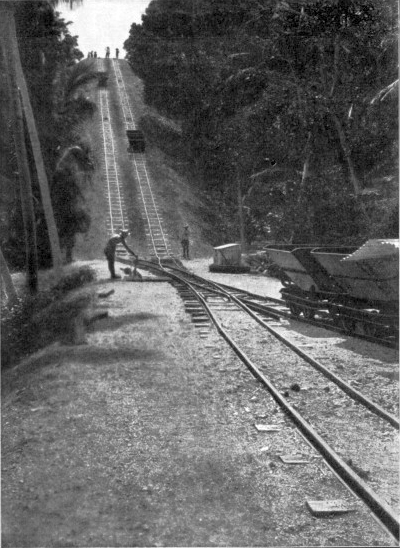
However, government officials squandered the mining trust funds through poor financial decisions. Millions of dollars were lost on failed real estate ventures, hotel developments, and an unsuccessful West End musical about Leonardo da Vinci. By 2006, the phosphate reserves were almost entirely depleted, removing the island’s primary source of revenue.
A Hollowed-Out Geography
Decades of aggressive strip mining drastically altered Nauru’s physical environment. Extraction hollowed out the center of the island, turning 80 percent of the landmass into an uninhabitable landscape of jagged coral pillars. Toxic cadmium residue and phosphate dust polluted the local air and surrounding water.
Facing insolvency, the government sought alternative income sources, which included selling passports and hosting an offshore refugee detention facility for Australia during the 2000s and 2010s.
Modern Public Health Challenges
Today, the 12,000 residents of Nauru face severe logistical hurdles. The island lacks rivers, meaning most drinking water is imported. Because the ruined landscape cannot support agriculture outside of a narrow coastal strip, almost all basic goods and foods are shipped in.
This reliance on imported goods like tinned food, white rice, instant noodles, and soda has triggered widespread health issues. Current data shows that 97 percent of Nauruan men and 93 percent of women are overweight or obese, with the population experiencing exceptionally high rates of Type 2 diabetes.