
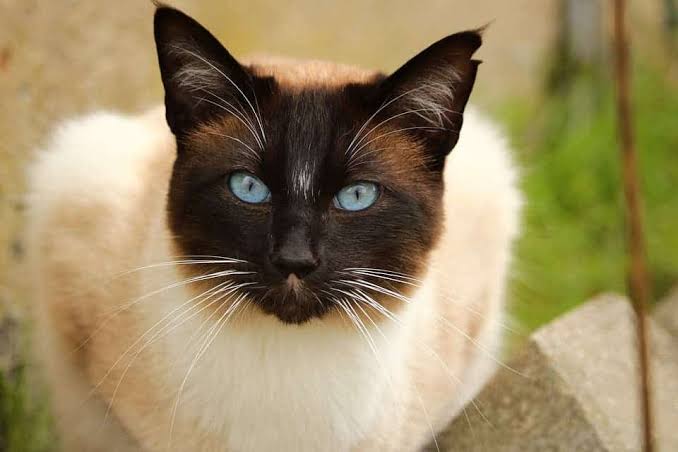
In 1975, a highly technical paper on low-temperature physics was published in a prestigious scientific journal. The research listed two authors, but one of them was hiding a furry secret. F. D. C. Willard was not a brilliant human physicist. He was actually a Siamese house cat named Chester.
This is the documented history of how a family pet successfully infiltrated the strict academic publishing world and went on to publish his own solo scientific essay.
A Typing Error Leads to a Fake Co-Author
Jack H. Hetherington worked as a physicist and mathematician at Michigan State University. He had just finished writing an intricate research paper to submit to the journal Physical Review Letters. Before sending it in, a colleague reviewed the text and noticed a major formatting problem.
Hetherington had typed the entire document using the plural pronoun “we” instead of “I”. The publication rules stated that submissions featuring a single author would be immediately rejected if they used the plural form. Rather than spending hours retyping the manuscript to fix the pronouns, Hetherington decided to invent a fake colleague.
Creating the Identity of F. D. C. Willard
The physicist needed a name that his peers would not immediately recognize. He looked to his pet Siamese cat, Chester. The cat had a father named Willard. To make the name sound professional, Hetherington used the scientific name for a house cat, Felis domesticus.

He abbreviated those Latin words and combined them with the cat’s actual name to create the pen name F. D. C. Willard. The journal accepted the article, titled “Two-, Three-, and Four-Atom Exchange Effects in bcc ³He”, and published it in November 1975.
Paw Prints Expose the Feline Physicist
The true identity of the second author remained a secret until 1978. During the 15th International Conference on Low Temperature Physics in Grenoble, Hetherington handed out copies of the published article to his friends. These specific copies featured the official signatures of both authors.
Next to Hetherington’s name was an ink paw print belonging to the cat. The academic community quickly learned the truth. When callers phoned Michigan State University and found Hetherington absent, they would ask to speak with the feline co-author.
A Solo Publication and Open Access
Following the exposure, F. D. C. Willard started appearing in the footnotes of other research papers, receiving thanks for his contributions to oral communications. He was even offered a position as a professor. In September 1980, the cat achieved a solo publication.
An essay credited entirely to F. D. C. Willard titled “L’hélium 3 solide. Un antiferromagnétique nucléaire” appeared in the French popular science magazine La Recherche. Decades later, the American Physical Society celebrated the famous feline. On April Fool’s Day in 2014, the organization announced that all cat-authored papers would be permanently free to read on their website.