
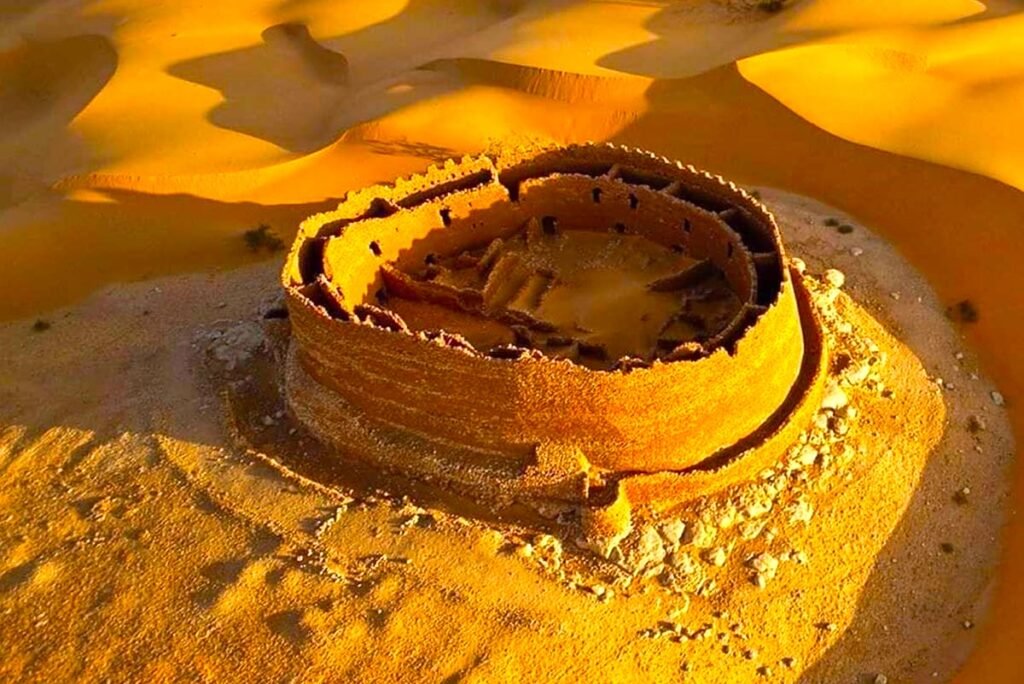
Deep within the shifting sands of Algeria’s Timimoun Province stands a colossal architectural anomaly. Rising from the Sahara Desert is Ksar Draa, a circular citadel constructed of sand, clay, and stone. While millions visit the Giza Pyramids or Machu Picchu, this remote outpost remains virtually unknown and completely shrouded in secrecy.
Nobody knows who built it, when construction took place, or why it was eventually abandoned. The fortress simply exists in the dunes, challenging historians with a persistent puzzle.
A Formidable Stronghold In The Sahara
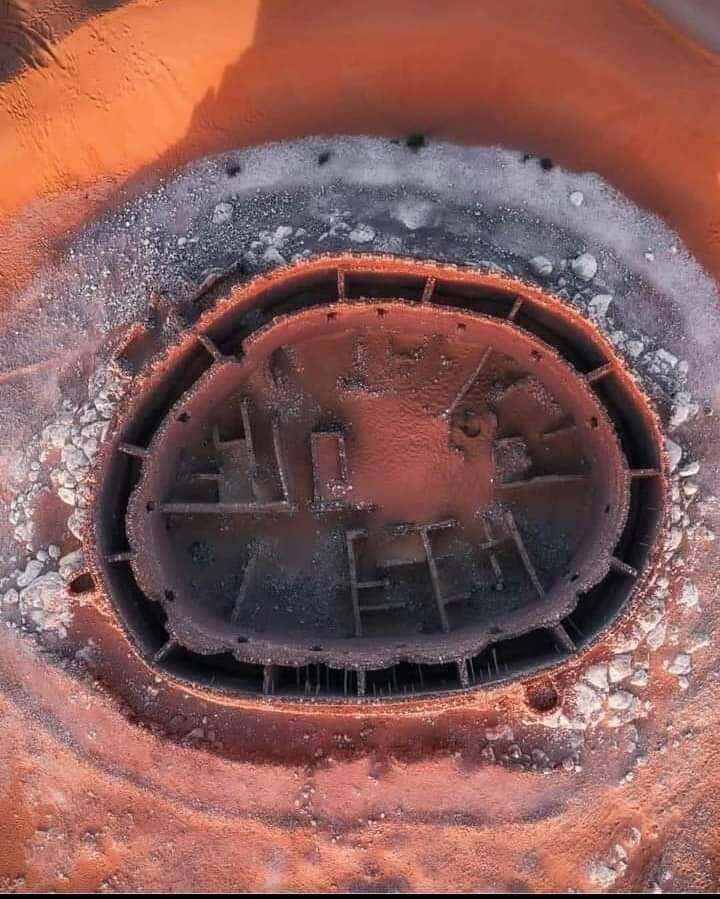
The structure of Ksar Draa distinguishes it from traditional fortified villages in North Africa. The word “ksar” translates to castle in Arabic, and Ksar Draa certainly resembles a massive military installation. Most Berber settlements, established by a civilization present in North Africa since the beginning of recorded human history, feature attached houses clustered in mountainous regions alongside shared granaries. Ksar Draa, however, forms a perfect circle in the middle of flat desert terrain.
Its massive defensive walls stretch over 30 feet (9.1 meters) high and measure more than six feet (1.8 meters) thick. Builders utilized a mixture of sand, straw, and clay to erect these barriers, providing excellent insulation against the intense heat and violent sandstorms. Designed with only a single entrance, the citadel offered maximum security against outside threats. Inside, the now-crumbling walls likely divided the space into houses, communal kitchens, schools, and potentially a large mosque.
Caravanserai, Prison, Or Refuge
Researchers estimate the site is at least 700 years old, yet a total lack of inscriptions or hieroglyphs leaves its exact purpose unconfirmed. Several theories attempt to explain why someone would construct such a massive complex in this harsh environment. One leading hypothesis proposes the fortress operated as a caravanserai. These fortified roadside inns offered merchants and pilgrims a secure place to rest, store goods, and stable animals while navigating the dangerous trans-Saharan trade routes.
Alternatively, the isolated location has led some to suggest it functioned as a prison, using the vast ocean of surrounding sand dunes to deter escapes. Another prominent theory connects the site to the 15th century. During that period, Islamic scholar Muhammad al-Maghili orchestrated campaigns against local Jewish communities. Fleeing religious persecution, these displaced groups may have sought shelter behind the thick walls of Ksar Draa.
An Unexcavated Historical Enigma
The definitive truth remains buried. To date, no major archaeological excavation has taken place at the site. A thorough scientific dig could potentially unearth artifacts belonging to traveling merchants, fleeing refugees, or former inmates. Until physical evidence is recovered from beneath the Saharan sands, Ksar Draa will maintain its secrets. The structure continues to stand in the Timimoun Province, holding onto the history of its unknown creators.