
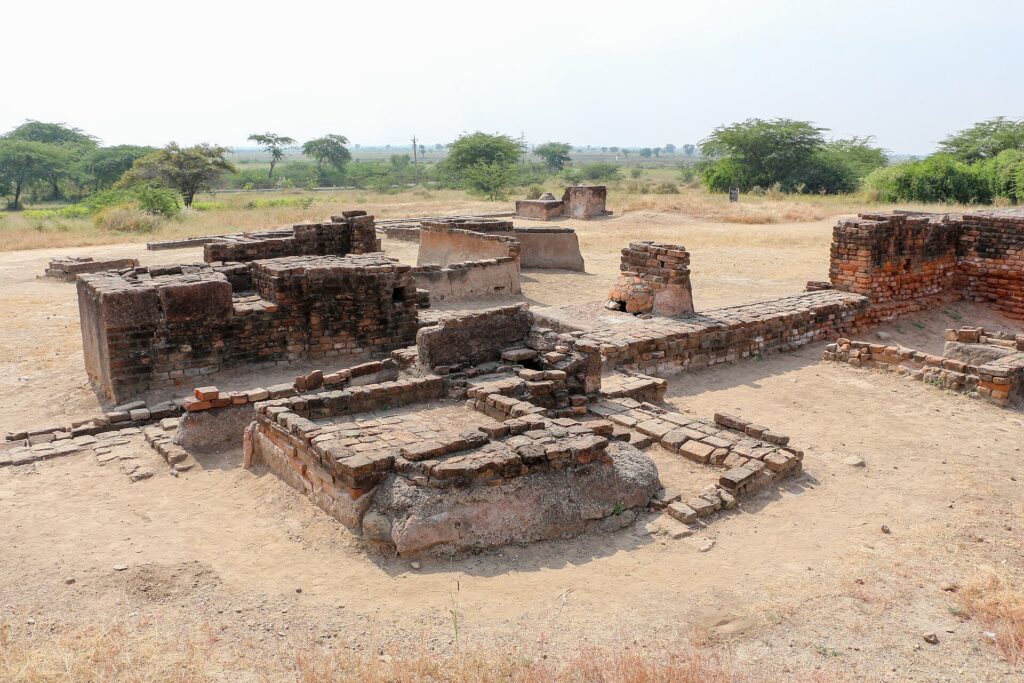
What did city plumbing look like 4,500 years ago? Long before modern pipelines, settlements in the Indian subcontinent developed complex hydraulic engineering. The ancient Indus Valley Civilization, located in present-day eastern Pakistan and northern India, constructed sophisticated drainage systems, underground sewers, and multi-story brick houses with indoor plumbing. This early urban plan featured specific devices for water supply and waste disposal, establishing comprehensive sanitation infrastructure.
Indoor Toilets and Brick Sewers
Within cities like Harappa, Mohenjo-daro, and Rakhigarhi, individual homes obtained water from private wells. Many two-story courtyard houses featured both a washing platform and a dedicated waste disposal hole. Inhabitants flushed these early toilets by pouring a jar of water drawn from the central well.
The water flowed through a clay brick pipe and entered a shared brick street drain. These drains fed into adjacent soak pits. The solid matter in these cesspits was periodically emptied and possibly utilized as fertilizer. To move water to ground level, inhabitants used lifting devices like shadoofs and sakias, while city walls functioned as physical barriers against floods.
The Infrastructure of Mohenjo-daro
Mohenjo-daro in Sindh contained more than 700 wells. Builders constructed houses using mud, dried mud bricks, or clay bricks of a standardized size. Water from bathrooms on roofs and upper floors traveled through enclosed terracotta pipes or open chutes directly into the public street drains.
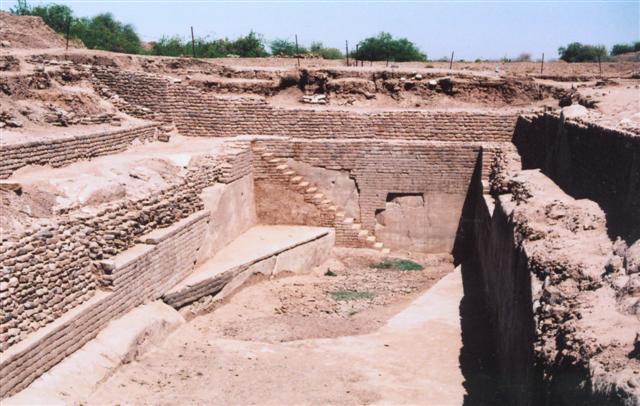
The main underground sewers featured precisely laid bricks and included specific holes at regular intervals to allow for cleaning and inspection. The city also housed a large structure known as the Great Granary and the Great Bath, a massive public pool measuring approximately 11.88 meters (39.0 feet) long and 7.01 meters (23.0 feet) wide.
Engineering at Dholavira and Lothal
In Gujarat, India, the city of Dholavira operated between 3000 and 1500 BC. The settlement contained a series of rainwater harvesting systems, water storage tanks, stepwells, and at least five baths. The size of one of these baths was comparable to the Great Bath in Mohenjo-daro. Nearby, the excavated site of Lothal, which existed from 2350 to 1900 BC, utilized two primary wells, with one located in the acropolis and the other situated by the town dock.
Advanced Waste Disposal Mechanisms
More than a dozen houses in Lothal’s acropolis possessed internal bathing platforms. These platforms drained into a covered communal sewer held together with a gypsum-based mortar, which ultimately emptied into a cesspit located outside the city wall.
One relatively large house possessed a bathing platform with an attached latrine that discharged directly into the town dock via a separate open drain. In Lothal’s lower town, residents utilized soak pots. These large sunken jars featured a hole in the bottom to permit liquid drainage and required regular emptying and cleaning by the inhabitants.