
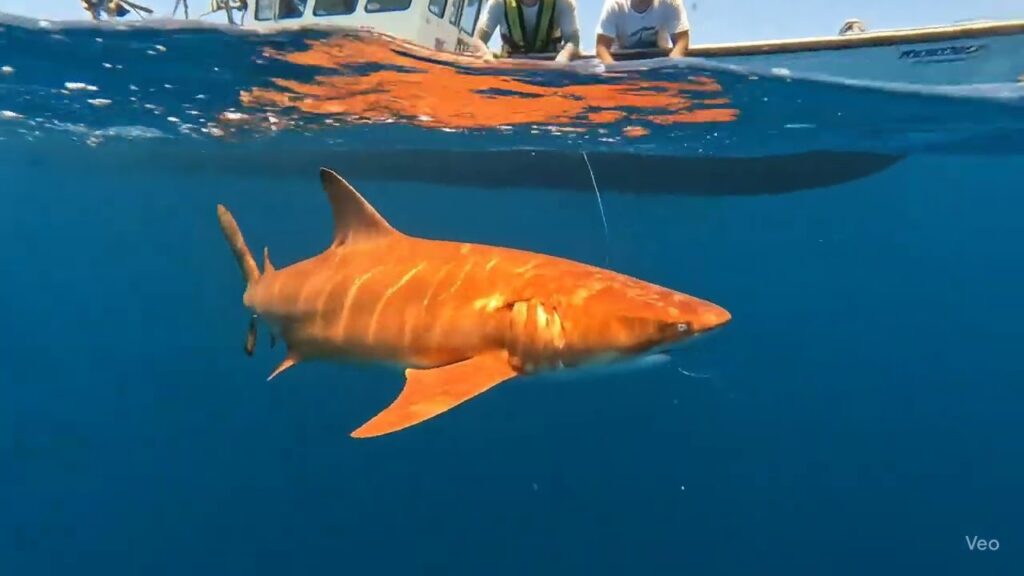
Sports fishers exploring the deep waters off the eastern coast of Costa Rica pulled a 6.6-foot (2-meter) marine creature from a depth of 120 feet (37 meters) that left observers thoroughly astonished. Shining bright orange in the open sunlight, the nurse shark with pale white eyes represented a rare scientific anomaly never before documented in its species.
Normally sporting a subdued yellow to gray-brown skin tone, this adult individual survived in the open ocean despite carrying two distinct genetic conditions that completely altered its physical appearance. The unexpected catch initiated a detailed scientific investigation that recorded the biological mechanisms behind this unique Caribbean Sea discovery.
Uncovering an Unusual Catch in Parismina Waters
Garvin Watson, the owner of the Parismina Domus Dei hotel, reeled in the shark during a 2024 fishing trip near the village of Parismina in Costa Rica. The ocean creature measured roughly 6.6 feet (2 meters) in length and swam at a depth of 120 feet (37 meters) below the surface when hooked.
Upon bringing the bright orange shark alongside the boat, Watson and his companions photographed the animal from multiple angles. The fishers carefully removed the hook from its mouth and safely released the live shark back into the Caribbean Sea.
Documenting Dual Genetic Conditions in Marine Science
Researchers examined the photographic evidence and formally published their findings on August 1, 2025, in the peer-reviewed journal Marine Biodiversity. Lead study author Marioxis Macías-Cuyare, a doctoral candidate in biological oceanography at the Federal University of Rio Grande in Brazil, confirmed that the shark exhibited total xanthism. This condition significantly increases yellow and orange pigmentation throughout the skin.
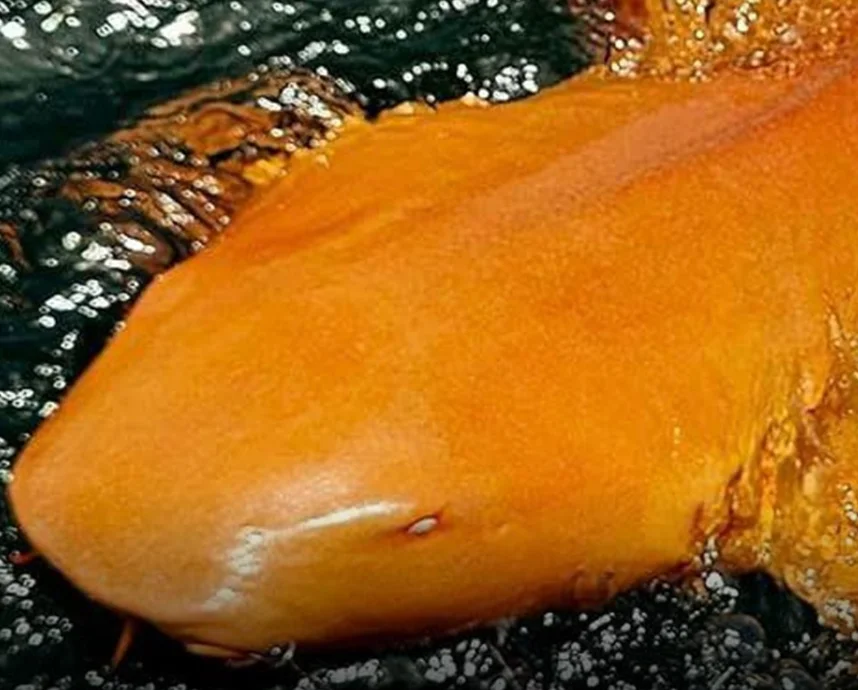
While xanthism appears in frogs, birds, and other fish species, this event marked the first scientifically verified case in a nurse shark. Additionally, the shark lacked the black irises typical of the species, pointing to albinism, which is the complete absence of melanin. The simultaneous presence of both traits created a combined condition identified as albino-xanthochromism.
Examining Potential Drivers of Unique Skin Pigmentation
Standard nurse sharks rely on their natural yellow to gray-brown skin tone to match their underwater surroundings. Although bright orange pigmentation might typically hinder an animal in the wild, this specific shark successfully reached adulthood without visible physical limitations.
Scientists note that while abnormal coloration is primarily tied to genetic factors, external environmental variables can also contribute. Fluctuations in water temperature, environmental stress, and hormonal imbalances are known to influence pigmentation in marine animals. Researchers emphasize that further study is required to isolate how genetic traits and environmental conditions interact to generate total xanthism in wild shark populations.