
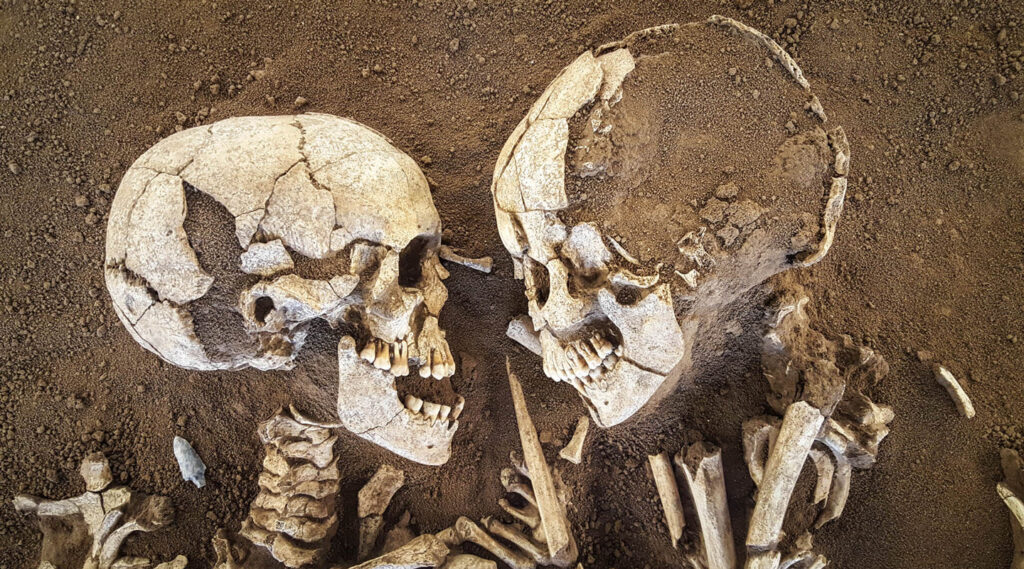
In 2007, a team of archaeologists working in a small Italian village uncovered a 6,000-year-old burial site that immediately captured global attention. Beneath the soil, researchers found two human skeletons locked in a tight, face-to-face embrace with their arms and legs physically intertwined.
The discovery of these Neolithic remains prompted intensive scientific examinations to determine who these people were and how they ended up buried in such a specific position. The forensic findings completely changed the initial theories about their final moments.
A Rare Neolithic Double Burial
In the village of Valdaro, located near the city of Mantua, Italy, routine construction work led to a major archaeological dig. During the excavation, scientists found a double burial dating back to the Neolithic period, approximately 6,000 years ago. The skeletons were positioned directly facing each other.
Their arms were wrapped around one another, and their legs were deeply overlapping. Double burials from this specific time period are exceedingly rare, and finding two individuals physically holding each other was an unprecedented event for the excavation team.
Forensic Analysis of the Skeletons
Researchers transported the remains for a thorough osteological examination to determine their age and physical condition. The scientists concluded that the two individuals were a male and a female. Both were relatively young, estimated to be around 20 years old at the time of their deaths.
They both stood approximately 1.57 meters (5 feet 2 inches) tall. The physical examination of their bones revealed no fractures or indications of trauma that would point to a violent end.
Flint Weapons and Grave Goods
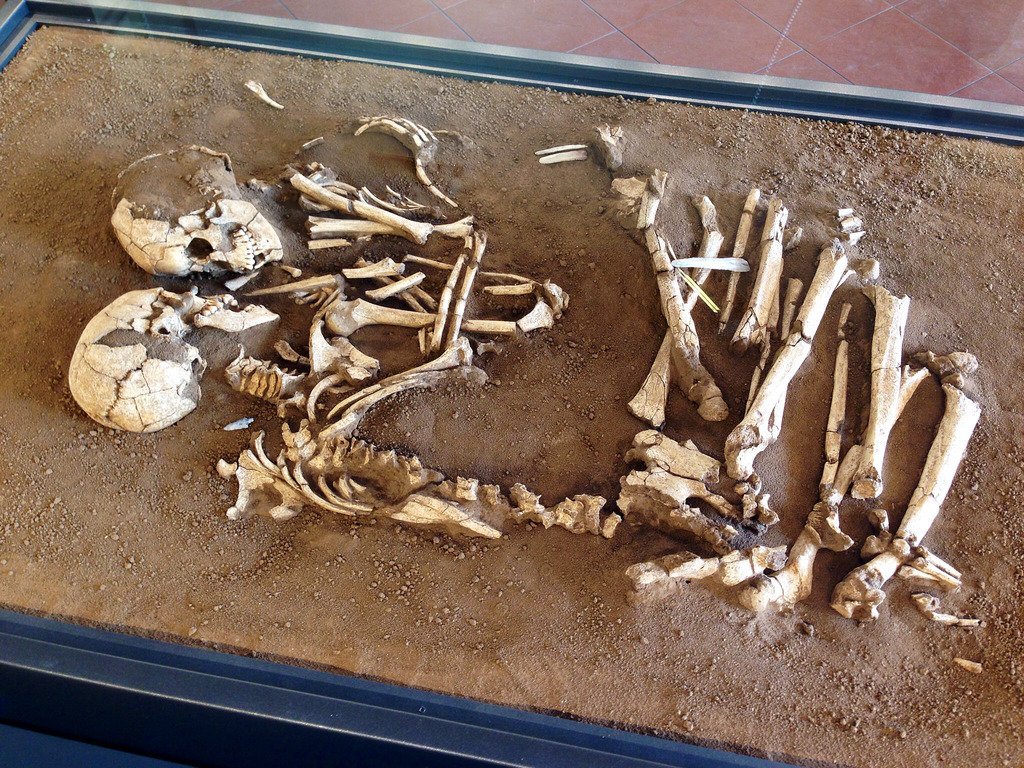
When the archaeologists first cleared the dirt away, they found several flint implements buried right alongside the bodies. The male skeleton had a single flint arrowhead positioned near his neck. The female skeleton had a long flint blade along her thigh and two additional flint arrowheads near her pelvis.
Because the bones showed no physical damage from these sharp objects, scientists determined the items were placed in the grave alongside the bodies after death, rather than being the weapons that killed them.
Relocating the Entwined Remains
To preserve the exact positioning of the skeletons, the head archaeologist decided not to separate the bones at the original site. Instead, the excavation team carefully dug around the entire burial. They lifted the remains and the surrounding soil as a single, solid block weighing roughly 272 kilograms (600 pounds).
The complete block of earth was placed in a wooden box and moved to a specialized laboratory. Today, the skeletons remain in their original intertwined position and are displayed inside a glass case at the National Archaeological Museum of Mantua.