
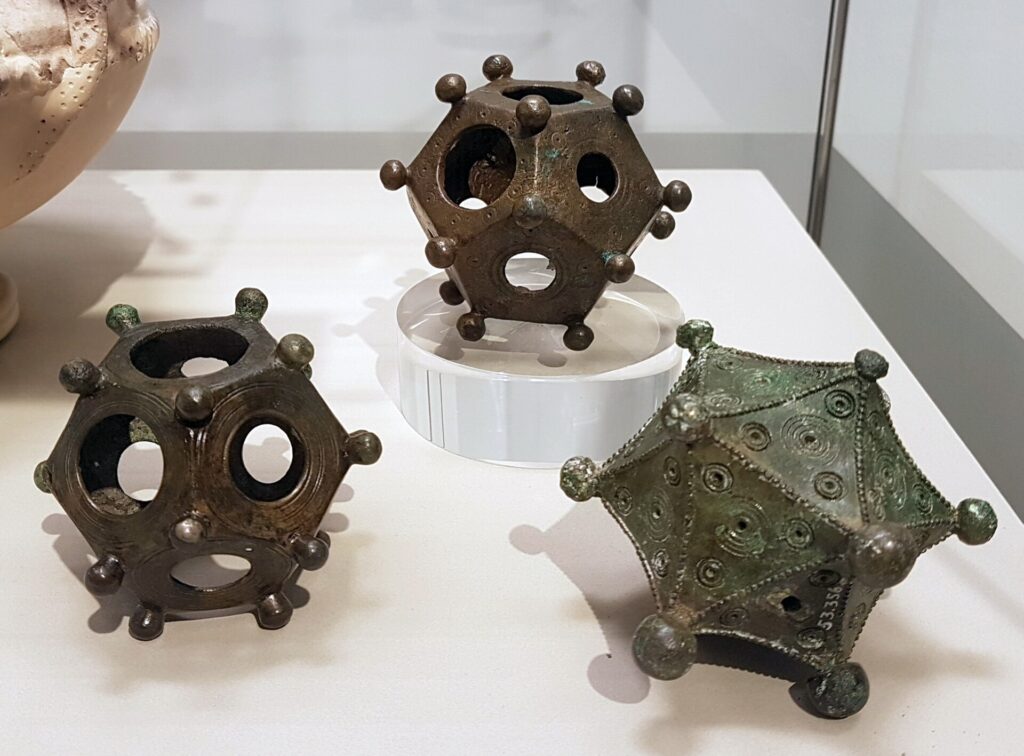
In June 1739, a peculiar metallic object emerged from the dirt in a Hertfordshire field, sparking a historical puzzle that continues to baffle experts today. Cast in a 12-sided geometric shape, the hollow artefact featured distinct circular holes and small metal spheres resting on every corner.
Archaeologists call it a Roman dodecahedron. Over the last 300 years, excavators have pulled more than 130 of these bronze items from the soil across Europe, yet no ancient text or painting explains their purpose. Today, researchers remain completely in the dark about what the Romans actually did with them.
A Precise Geometric Design
Roman dodecahedra were created between the second and fourth centuries AD using a complex lost-wax casting technique. Crafted primarily from copper alloys containing tin and lead, each object consists of 12 flat, pentagonal faces. Circular openings of varying widths connect to a hollow center.
They range in size from 4 to 11 centimeters (1.6 to 4.3 inches) and weigh anywhere from 35 grams (1.2 ounces) to 1 kilogram (2.2 pounds). The hole diameters vary between 6 and 40 millimeters (0.24 and 1.57 inches). Makers polished the outer surfaces and frequently added concentric circles around the openings, while leaving the interiors completely unfinished. Interestingly, they completely lack any inscribed letters or numbers.
Where the Artifacts Emerge
The geographic distribution of these items presents another layer of the puzzle. Excavators have unearthed them exclusively north of the Alps in former Roman territories like modern-day France, Germany, Belgium, and the Netherlands.
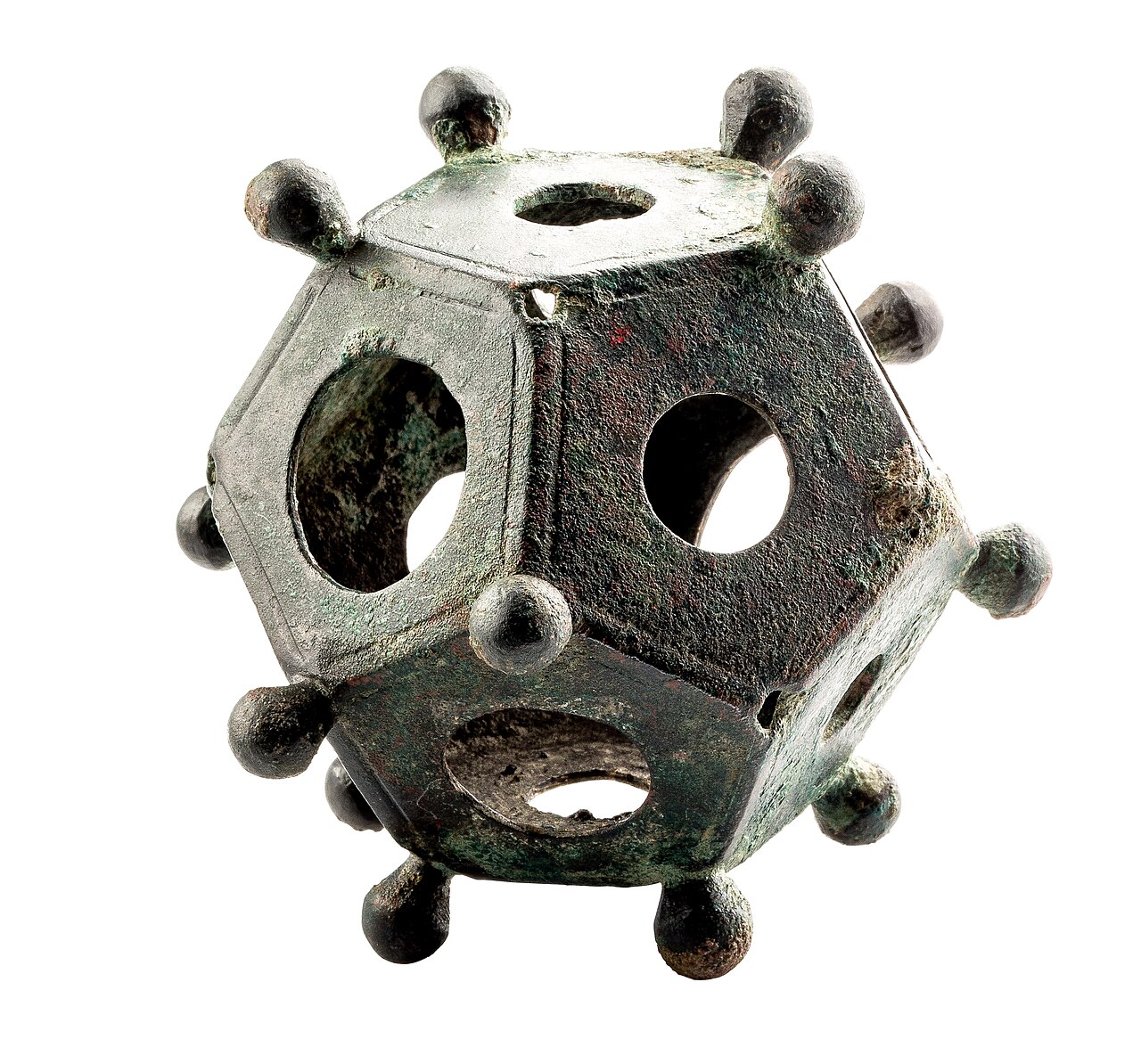
Archaeologists have never found a single dodecahedron in Italy. In 2023, the Norton Disney History and Archaeology Group discovered a well-preserved specimen in a trench in Lincolnshire, bringing the total number found in the United Kingdom to 33. Researchers located this specific piece alongside animal teeth, pottery, and tiles.
Investigating Possible Uses
Without historical documentation, historians have proposed over fifty functional explanations. Some suggest they functioned as measuring instruments to calculate distances. Others propose they acted as spool knitting tools to create gloves.
A few researchers point to discoveries within coin hoards to argue people used them to check currency diameters. Other hypotheses suggest they functioned as qualification tests for metalsmiths or religious ritual items. Because they rarely show signs of physical wear, experts routinely rule out mundane, heavy-duty applications.
Variations and Similar Findings
While the standard 12-sided copper design is the most common, researchers have documented variations. Excavators in Geneva found a solid silver version inscribed with zodiac names in 1982. In Germany, archaeologists uncovered an icosahedron featuring 20 faces.
Smaller gold versions containing similar holes and knobs have also appeared in Southeast Asia. Despite these global discoveries and continuous archaeological analysis, the true purpose of the Roman dodecahedron remains completely unknown.