
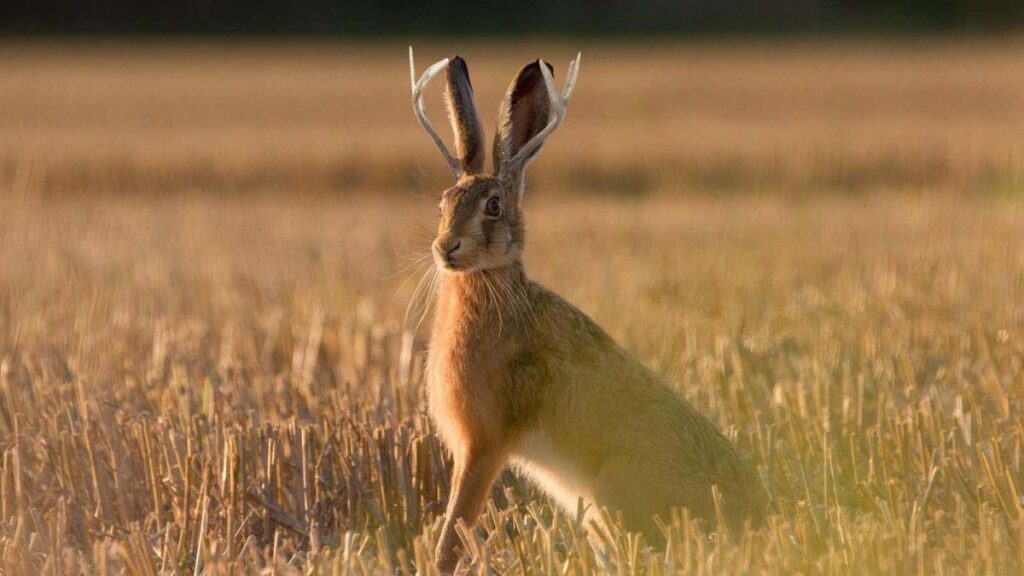
In 1934, a dead jackrabbit sliding across a floor in Wyoming accidentally collided with a pair of deer antlers, sparking one of the most widespread animal phenomena in American history. What started as a simple taxidermy project quickly expanded into a national sensation, complete with fake hunting licenses, government debates, and scientific investigations. This is the factual account of the jackalope, a horned creature that managed to fool tourists, inspire tall tales, and captivate an entire state.
A Taxidermy Accident in Douglas
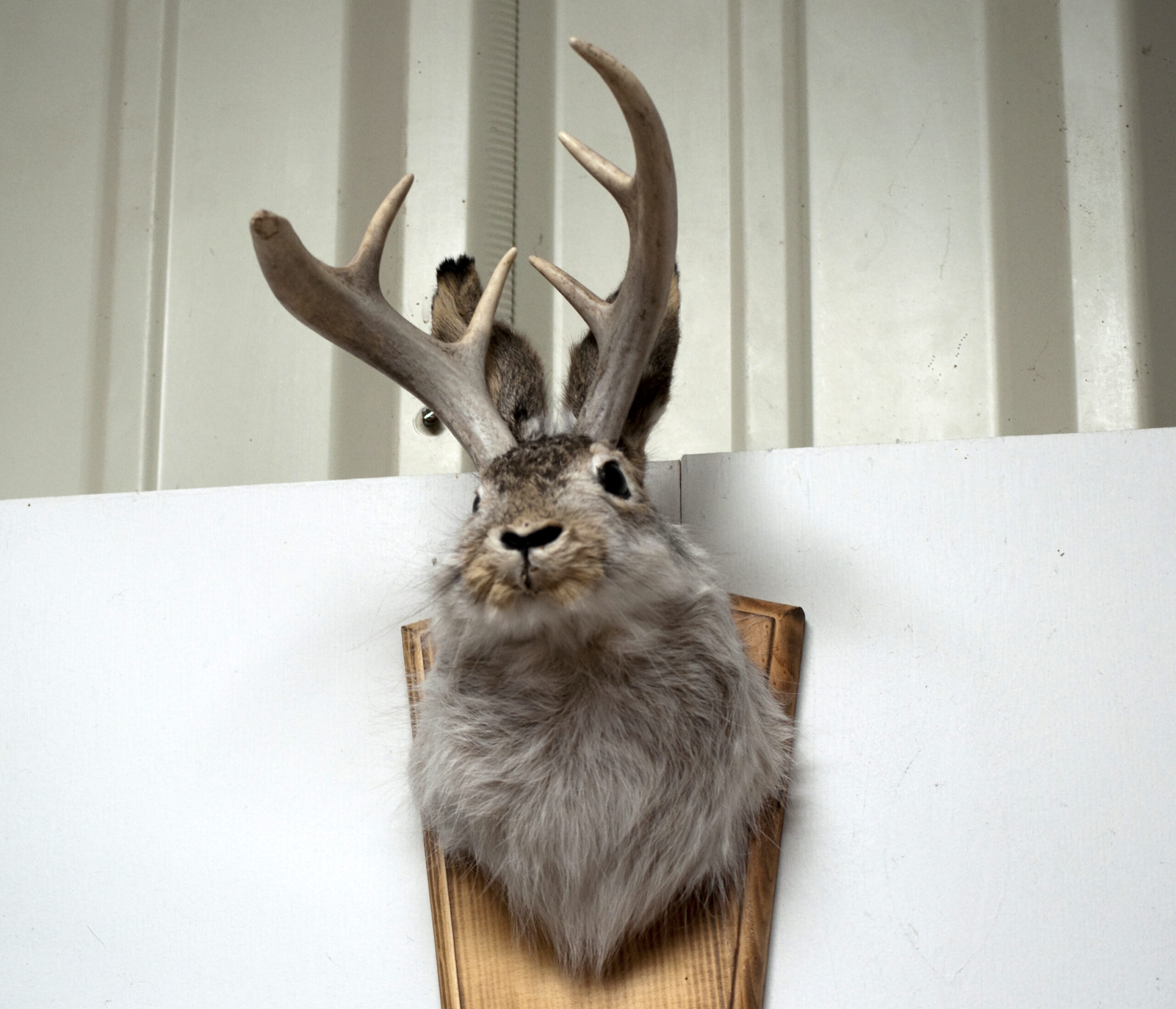
Douglas Herrick and his brother Ralph were hunters who studied mail-order taxidermy as teenagers. After returning from a hunt in 1934, Douglas tossed a jackrabbit carcass into their shop. The animal slid across the room and came to rest perfectly against some deer antlers. Struck by the visual, the brothers decided to mount the rabbit with the antlers attached. They sold their very first mount for ten dollars to Roy Ball, who displayed it inside the local La Bonte Hotel in Douglas, Wyoming.
The Widespread Production of the Horned Hare
The mounted creature attracted immediate attention. The Herrick brothers began producing the mounts in large quantities, struggling to keep up with the overwhelming demand. Another taxidermist, Frank English, later took over mass production in South Dakota, supplying thousands of the horned rabbits to retail outlets. Soon, these mounted heads appeared on the walls of bars, restaurants, and tourist shops across the United States. Visitors eagerly purchased postcards and souvenirs featuring the animal.
Tall Tales and Fake Hunting Permits
As the mounts spread, locals invented elaborate stories about the animal’s behavior. People claimed the creatures could run up to 60 miles per hour, mimic human voices, and sing along with cowboys around campfires. To catch one, hunters supposedly had to lure it with whiskey. The town of Douglas capitalized on the phenomenon by issuing thousands of official hunting licenses. However, these permits were only valid on June 31—a date that does not exist—between midnight and 2 a.m., strictly for hunters with an IQ between 50 and 72.
The Scientific Explanation Behind the Myth
While the Wyoming variation originated in a taxidermy shop, historical reports of horned rabbits have a basis in biological reality. In 1933, Dr. Richard E. Shope published a scientific paper detailing wild cottontail rabbits infected with the Shope papilloma virus. This disease causes hard, horn-like tumors to grow on the heads and bodies of infected animals. Researchers conclude that actual sightings of these diseased rabbits in the wild likely inspired the earlier historical accounts of horned hares long before the Herrick brothers created their famous mounts.