
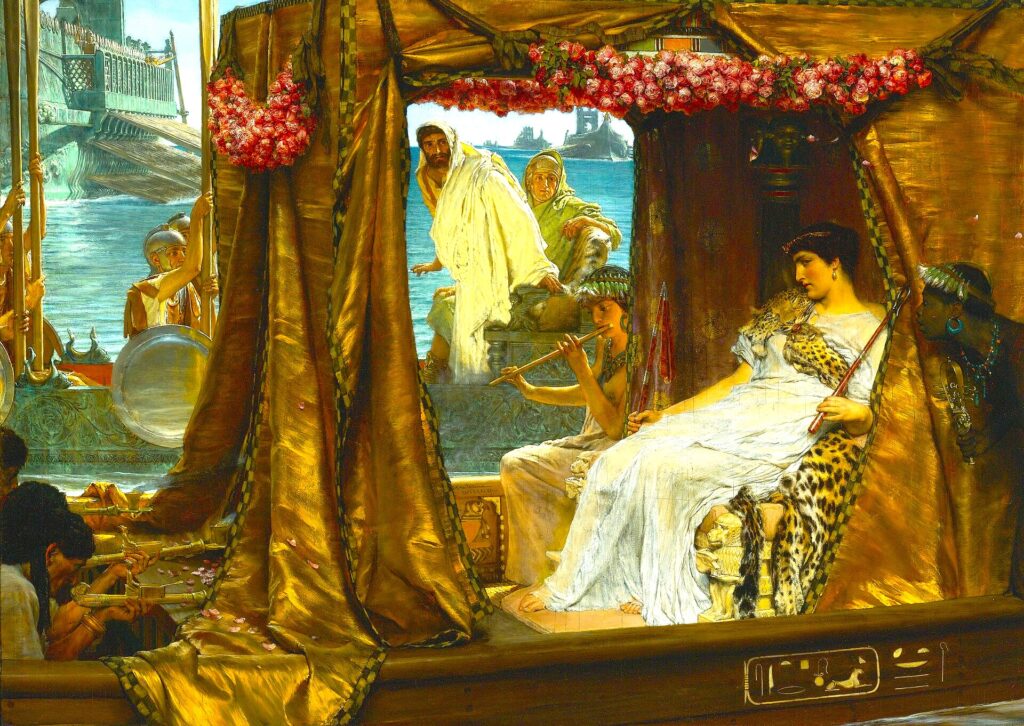
On August 12, 30 B.C.E., the famous Egyptian pharaoh Cleopatra VII died inside a locked mausoleum on her palace grounds in Alexandria. The official narrative has long claimed that the Queen of the Nile ended her own life using a venomous snake. However, physical evidence was scarce, and modern historians now challenge this ancient account. This is the factual history behind the demise of Egypt’s final pharaoh and the lingering questions surrounding her final moments.
The Fall of the Egyptian Pharaoh
Cleopatra’s reign crumbled after she and her ally, Mark Antony, suffered a massive defeat by Octavian at the Battle of Actium in 31 B.C.E.. The couple retreated to Alexandria, where Antony died in Cleopatra’s arms. With Octavian’s armies closing in, Cleopatra realized she had nowhere left to turn and feared being paraded through Rome as a humiliated prisoner. She retreated into her newly constructed mausoleum alongside two handmaidens, Iras and Charmion.
The Famous Egyptian Cobra Legend
According to popular legend, Cleopatra arranged for an Egyptian cobra, also known as an asp, to be smuggled into her chambers inside a basket of figs. The story states that she brought the writhing snake to her bare breast, dying swiftly from the fatal bite. Her two handmaidens also perished at the scene. Yet, even early historians expressed severe doubts. The Greek historian Plutarch noted that no reptile was ever found inside the sealed chamber. The Roman historian Cassius Dio recorded that the only physical marks on the queen’s body were slight pricks on her arm, confirming that no one clearly knew how she perished.
A Lethal Dose of Poison
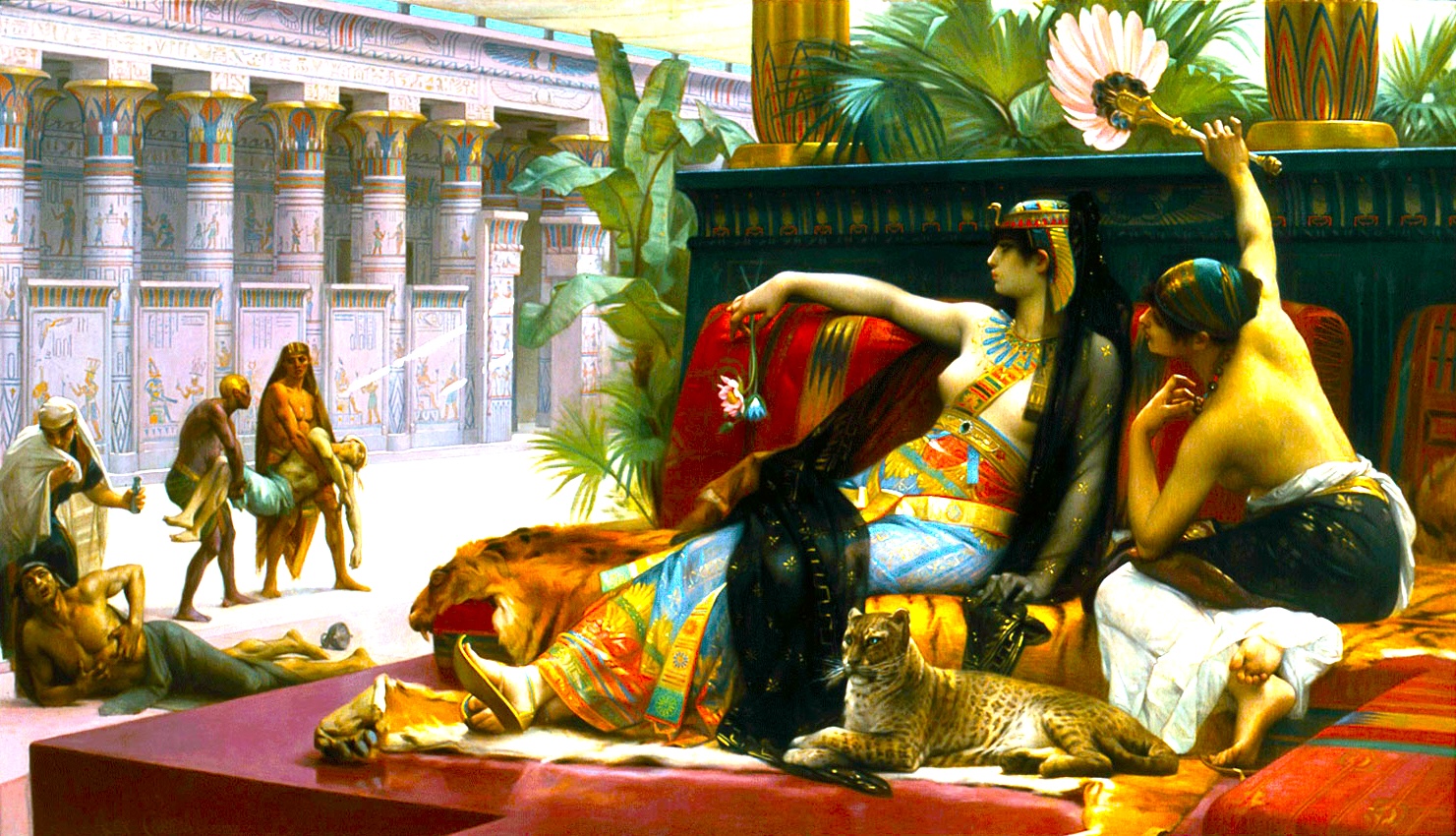
Contemporary experts highlight major flaws in the asp theory. An Egyptian cobra typically measures between five and eight feet long, making it nearly impossible to conceal within a small fruit basket. Additionally, snake venom is highly unpredictable and often causes excruciating pain rather than a quick demise. Ancient history professor Christoph Schaefer firmly argues that Cleopatra did not use a cobra. Instead, scholars suggest she likely drank a toxic, highly effective mixture of hemlock, wolfsbane, and opium.
A Roman Assassination Plot?
While death by poison is a prominent theory, some historians suggest Octavian may have orchestrated a murder. Cleopatra remained a dangerous political opponent while alive, and many Romans wanted her dead. Immediately following her death, Octavian killed her son Caesarion and fully annexed Egypt into the Roman Empire on August 31st. Per her final requests, Cleopatra was buried alongside Antony. Because their bodies have never been located, the exact cause of her death remains unverified.