
Ruling the massive Roman Empire usually guaranteed a permanent place in the history books. Yet, one ruler vanished from every written document, completely forgotten for over fifteen centuries. During the chaotic Crisis of the Third Century, a man named Silbannacus held power, but no contemporary historian ever recorded his name.
The world completely forgot he existed until two unexpected discoveries in the twentieth century brought him back into reality. The astonishing truth of his existence relies entirely on two small, ancient coins.
The First Artifact Emerges
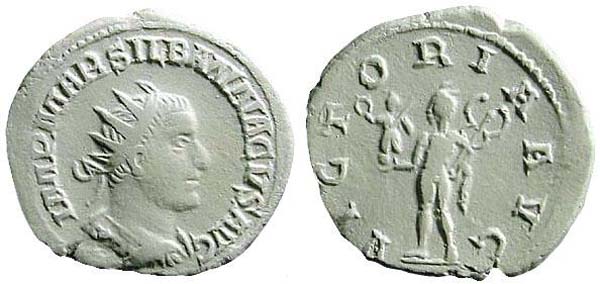
In the 1930s, the first piece of evidence surfaced in Lorraine, a region in what was once Roman Gaul. Acquired by the British Museum in 1937, the coin proclaimed the leader as Imperator Mar. Silbannacus Augustus. The item initially baffled experts because the Romans minted currency in massive volumes.
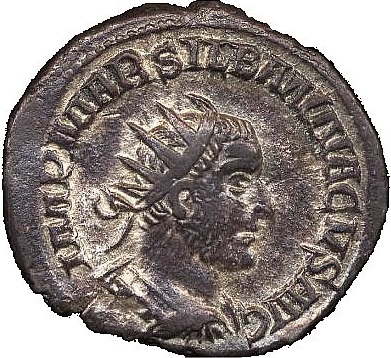
However, researchers authenticated it based on its silver content and a distinctly unique facial portrait. The coin depicted a young man with an aquiline nose, whiskers running down his jawbone, and a beardless chin. The physical composition firmly placed his active years somewhere between the years 238 and 260.
A Second Clue Surfaces
For decades, this single piece of metal was the only known artifact confirming his life. Then, in the 1980s, a second coin was discovered near Paris. It remained hidden in a private collection until French historian Sylviane Estiot officially published the finding in 1996. This second discovery finally established Silbannacus as a real historical figure. While the front matched the British Museum artifact, the reverse side featured the inscription “MARTI PROPVGT,” meaning “To Mars the defender.”
A Rebel in Gaul
Historians have constructed two distinct timelines for his reign. The older hypothesis suggests he operated as a usurper in Gaul around 248, during the rule of Philip the Arab. The first coin features Mercury, a prominent deity in Gaul. Researchers propose that Silbannacus might have been a provincial governor or a military commander of Germanic auxiliaries. He potentially launched a short-lived rebellion near the Rhine frontier, issuing his own currency before his uprising was quickly suppressed.
A Legitimate Ruler in Rome
A newer hypothesis places him directly in the imperial capital. The design and text of the second coin closely copy the currency of Aemilian, an emperor who ruled briefly in 253. This striking similarity strongly indicates that the coin was produced at the official mint in Rome. Under this theory, Silbannacus was an officer who took control of the capital immediately after Aemilian was assassinated. He may have briefly held the city as a legitimate emperor before the general Valerian arrived with his army weeks later to claim the throne.