
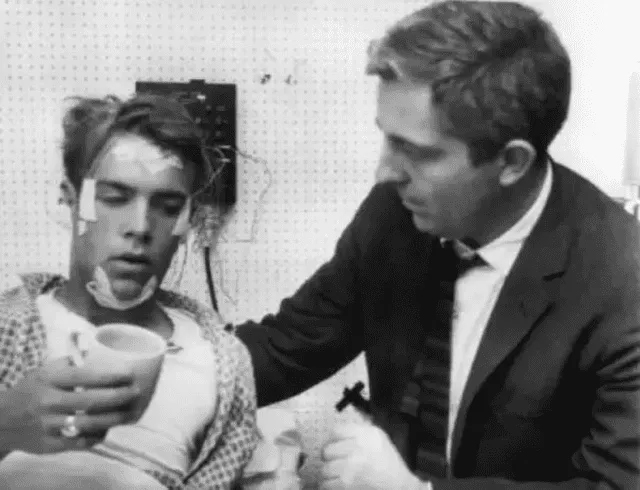
In 1963, a high school student decided to push the boundaries of human biology by completely abandoning sleep. For 11 days and 25 minutes, seventeen-year-old Randy Gardner stayed strictly awake to see exactly what would happen to his brain and body.
This extreme sleep deprivation experiment attracted medical professionals and set a widely documented historical record that Guinness World Records eventually stopped tracking. The following paragraphs outline the exact chronological events, the alarming medical effects observed by doctors, and the delayed aftermath of those continuous 264.4 hours.
The 11-Day Wakefulness Challenge
Between December 1963 and January 1964, Gardner executed his 264.4-hour wakefulness project in San Diego, California. Two classmates, Bruce McAllister and Joe Marciano Jr., maintained a continuous daily log of his waking hours.
Stanford sleep researcher Dr. William C. Dement and Lieutenant Commander John J. Ross carefully monitored the process. Dement observed that Gardner remained capable of playing arcade games like pinball even on the tenth day. Ultimately, Gardner successfully surpassed the previous wakefulness record of 260 hours held by Tom Rounds.
Hallucinations and Cognitive Decline
While some observations noted his physical activity, Lieutenant Commander Ross documented severe cognitive and behavioral deterioration. Gardner experienced intense moodiness, extreme paranoia, and vivid visual hallucinations. His short-term memory and ability to concentrate degraded rapidly.
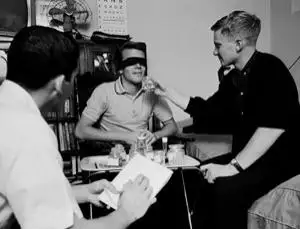
On the eleventh day of the project, Ross asked Gardner to continuously subtract seven starting from the number 100. Gardner stopped counting at 65. When the doctor asked to explain why he stopped, Gardner replied that he had completely forgotten what he was doing.
The Press Conference and Sleep Recovery
On the final day of the extreme sleep period, Gardner spoke directly to reporters at a press conference. He stated his original goal was to prove that going without sleep would not cause negative outcomes. Following this media event, Gardner immediately slept for 14 hours and 46 minutes.
He woke up naturally at 8:40 p.m., stayed awake until 7:30 p.m. the following evening, and then slept an additional ten and a half hours. Doctors recorded his brain activity during follow-up visits one, six, and ten weeks later.
Decades of Normalcy Followed by Insomnia
In 2007, decades after the original experiment concluded, Gardner began suffering from severe insomnia. He publicly stated his belief that his participation in the 1963 project caused this late-onset sleep disorder. Following Gardner’s widely known experiment, other individuals surpassed his time. Toimi Silvo reached 276 hours in February 1964, and Maureen Weston recorded 449 hours in 1977.
Due to the inherent medical dangers of these stunts, Guinness World Records officially discontinued monitoring voluntary sleep deprivation attempts. Gardner’s undertaking remains the most extensively documented instance of prolonged wakefulness.