
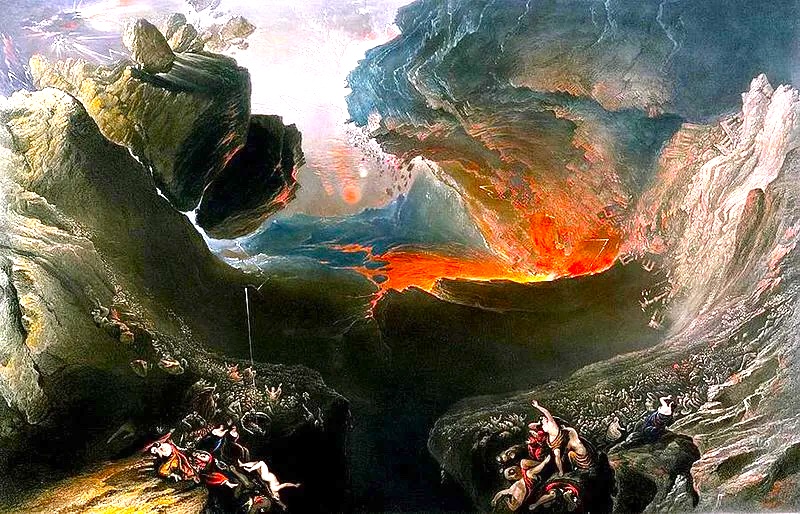
When experts search for the absolute worst period in history, they do not point to the Black Plague or World War II. According to Harvard University archaeologist Michael McCormick, the year 536 A.D. officially holds the record as the most catastrophic time to be alive.
A sudden environmental anomaly plunged the globe into eighteen months of darkness. An unexplained fog descended across Europe, the Middle East, and Asia, completely blocking the sun’s warmth. This atmospheric event triggered unprecedented global cooling and widespread starvation, setting the stage for an outbreak of the bubonic plague.
The Sun Goes Dark Over Earth
In early 536 A.D., a dense cloud of dust blanketed the sky. Historical records document that the sun cast no shadows at noon, while the moon appeared completely drained of its normal brightness. Because solar radiation could not penetrate the atmosphere, summer temperatures across Europe dropped between 1.5 and 2.5 degrees Celsius (2.7 and 4.5 degrees Fahrenheit) below their normal averages. This abrupt, extreme drop in climate initiated the single coldest decade the world had experienced in 2,300 years.
Global Famine and Freezing Summers
The sudden drop in global temperature had catastrophic effects on agriculture everywhere. In China, texts record that snow fell in the middle of August, which destroyed crops and delayed the harvest. A massive famine in the Guanzhong region led to widespread starvation and reports of cannibalism, resulting in the death of 70 to 80 percent of the local population. In Ireland, the failure of crops meant that standard bread could not be produced from 536 to 539 A.D..
Solving the Mystery With Ice Cores
For centuries, the exact cause of this prolonged fog remained unknown. Modern researchers analyzed ice cores from the Colle Gnifetti glacier in the Swiss Alps, alongside frozen deposits from Greenland and Antarctica. They found high concentrations of volcanic ash dating exactly to 536 A.D.. This proved that a massive volcanic eruption ejected the sun-blocking debris into the upper atmosphere. Additional eruptions followed in 540 A.D. and 547 A.D., creating a long freezing period known as the Late Antique Little Ice Age.
The Arrival of the Bubonic Plague
While the population suffered from freezing weather and malnourishment, a new disaster struck. In 541 A.D., the bubonic plague appeared in the Roman port city of Pelusium in Egypt. The disease spread rapidly across the weakened population. It eventually killed anywhere from one-third to one-half of the Eastern Roman Empire. The prolonged cold severely hindered economic recovery, keeping the affected continents in a continuous state of crisis until the year 640 A.D..